Tiergarten Stories
On a crisp day in late October, the novelist Nell Zink met the artist Marina Pinsky at Café Tiergarten in Berlin for the following conversation. Pinsky lives across from this café in the Hansaviertel neighborhood, which once was hailed as a testing ground for modern living. In 1957, architects including Arne Jacobsen, Oscar Niemeyer, and Walter Gropius were invited to design social housing for this new neighborhood as part of the Interbau. Pinsky lives in an apartment in the Egon Eiermann building and currently works across the street from a studio in the Alvar Aalto building. The neighborhood weaves through her artwork—most recently her solo exhibition Tomorrow Never Comes (2024) at Grotto, Berlin, an exhibition space which is nestled between these two buildings. Zink lives about an hour southwest of the capital, but her latest novel, Sister Europe (2025), unfolds over a single night in West Berlin, in the Tiergarten district between the Intercontinental Hotel and the Burger King in the former entrance Pavilion of the Interbau.
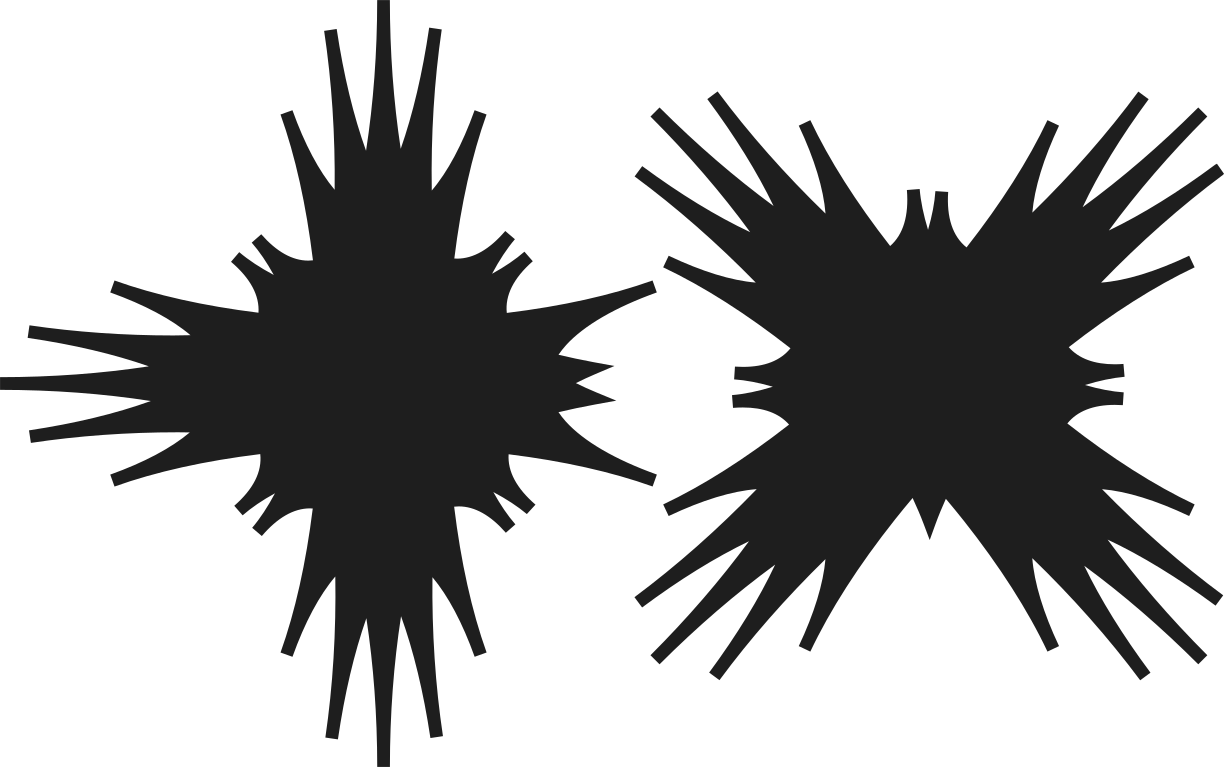
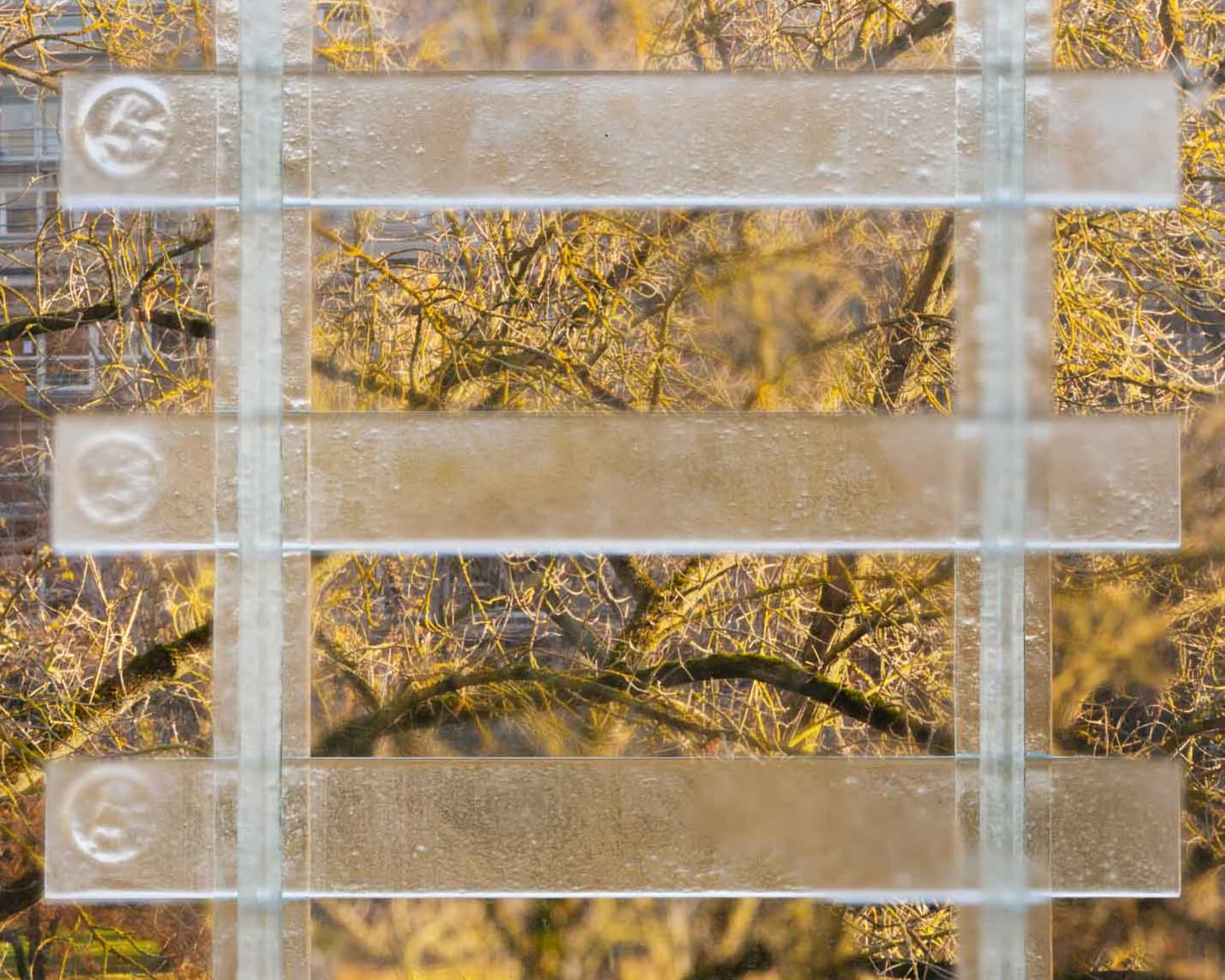
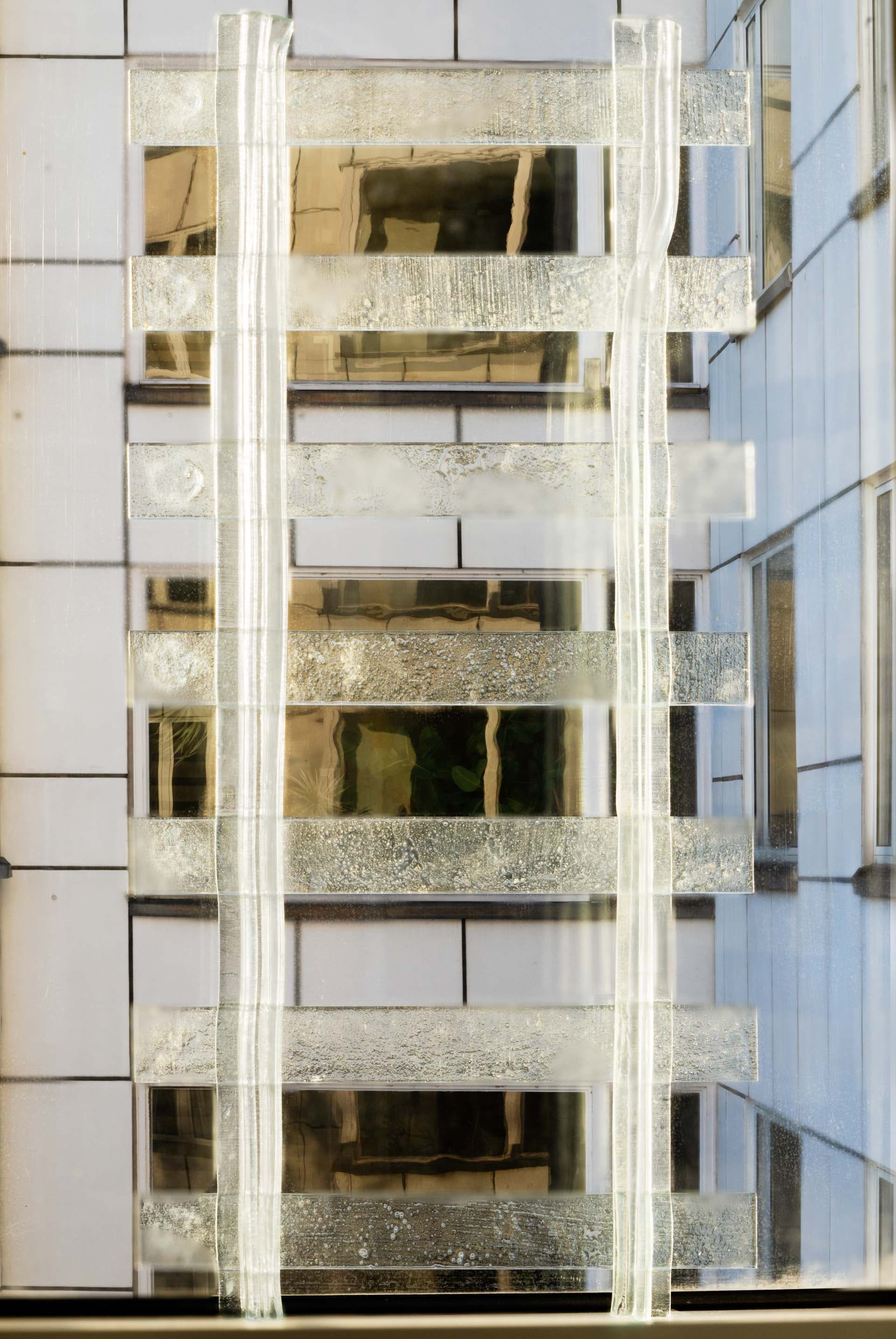
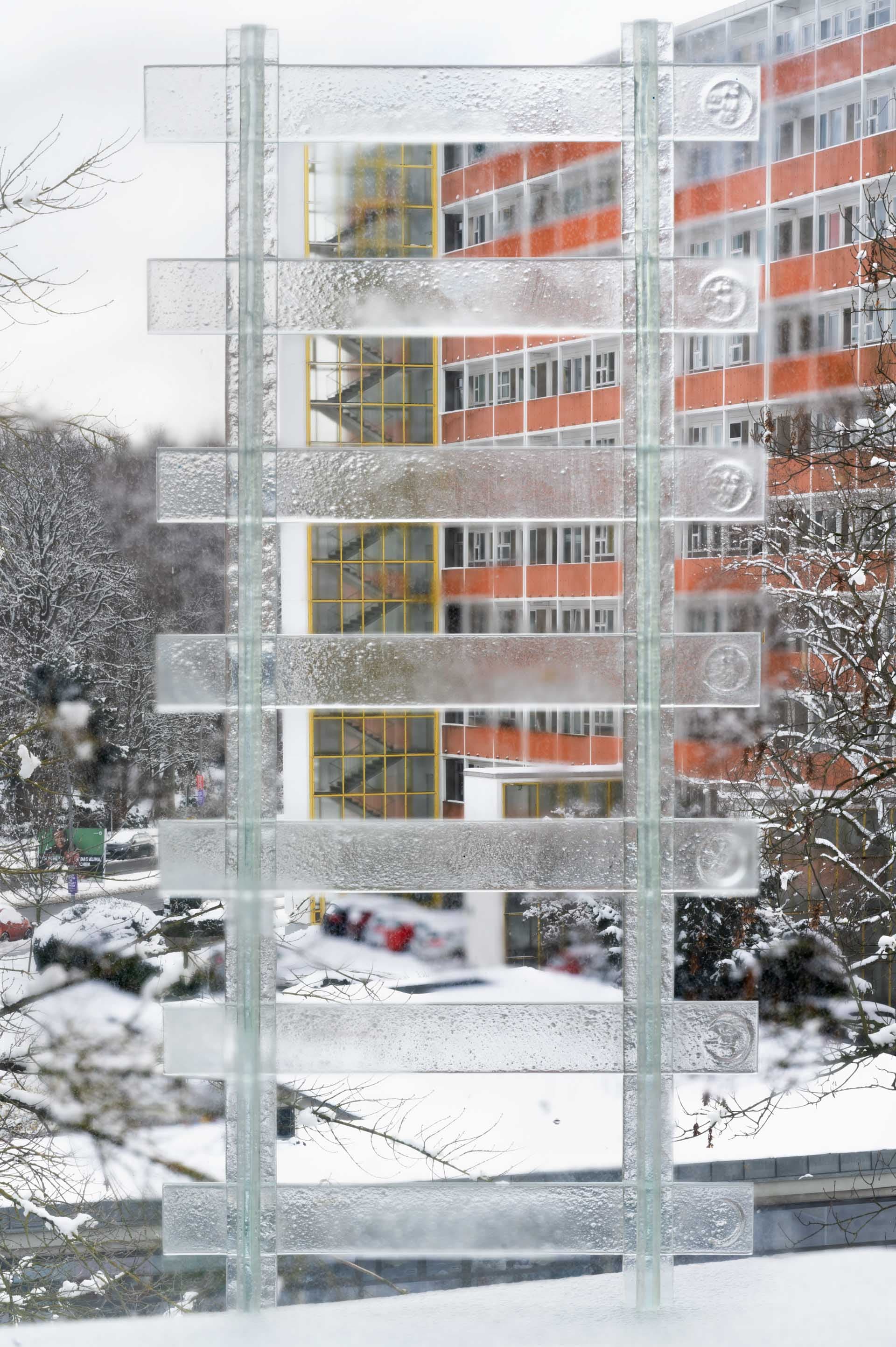
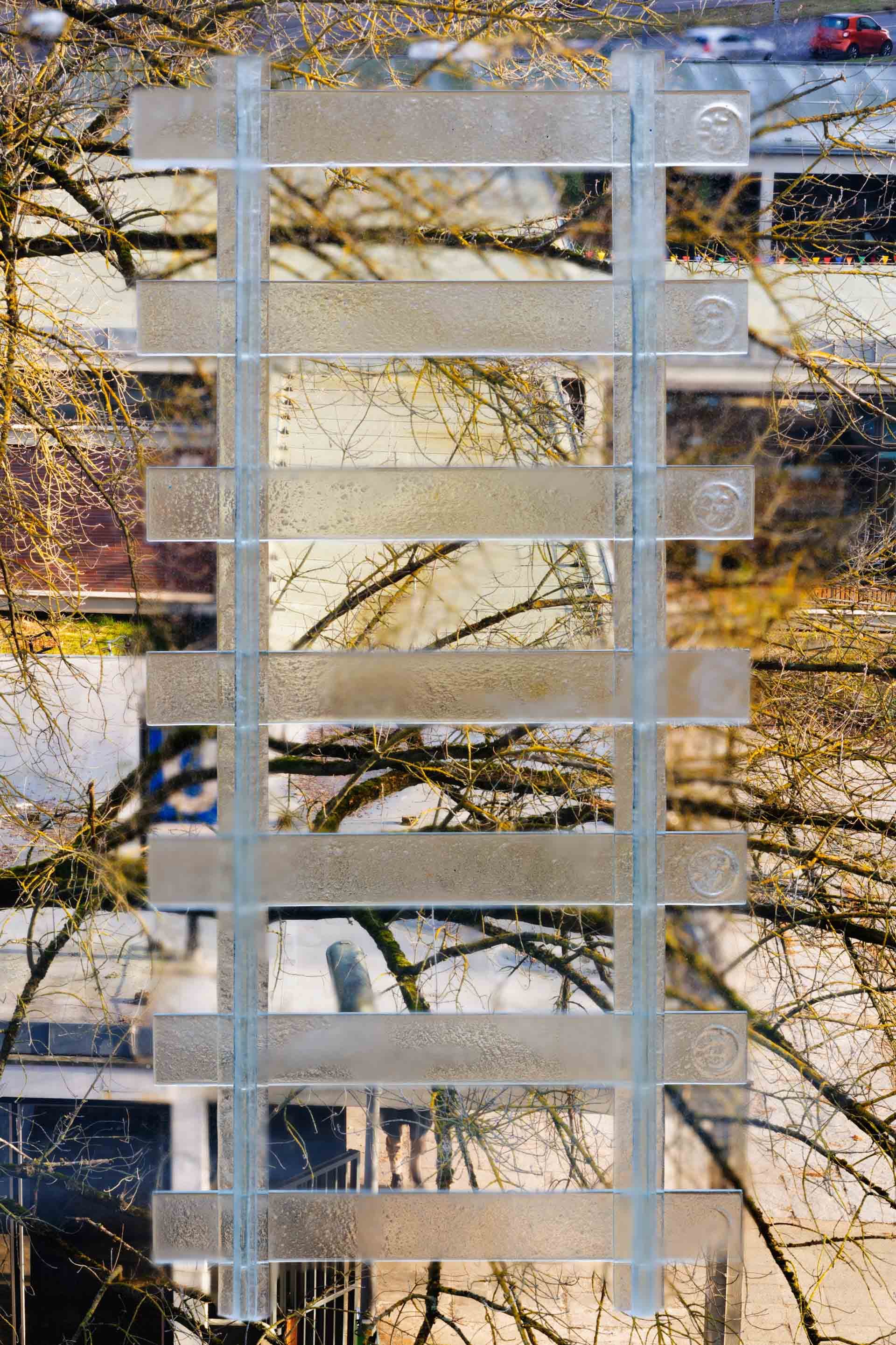
The accompanying images were produced by Pinsky in her studio.
I must admit that I have totally forgotten what your art looks like! I have a curator friend who constantly sends me art, and it’s all a big jumble in my head.
I studied photography, but now I do a lot of other things—sculptures, murals, installations. I’ve been in Berlin for about ten years, but I have also lived in Brussels for a lot of that time. Berlin might be a big city with a lot of resources and institutions, but I don’t think there’s enough of a system to support the number of artists here. Of course I know some people who aren’t artists. Do you hang out with other writers?
Hell, no. I did it a couple of times, and then two of them put me in novels in different unflattering ways.
Do you put real people or places in novels?
In Sister Europe, I did base one character on this elegant woman who has a great deal of knowledge and sophistication because of her background and surroundings. And yet intellectually she’s always slipping, because she lives in a world where her feelings really matter. She doesn’t have to justify her judgments, or if she does, it’s enough for her to say she likes or dislikes something, because she always does it with effortless grace. And then there is her bungalow, which is an imaginary place. It’s not in Hansaviertel. Yet I once met someone who told me they knew not only the house, but also the woman who lives in it. It weirds me out that of all the implausibilities I’ve ever written, people believe in that one.
I know that it doesn’t exist because I really know all of these houses. But I feel like it could be real because of the way you describe it. A lot of the things in the novel are that way. I wanted to ask you how you came to set the story in Hansaviertel. The Burger King is the best building in the neighborhood, and I was so happy that a big part of the book takes place there. I also made an artwork around it, a mural at Grotto, which is a project space near Hansaplatz. The design was based on a renovation plan for the Burger King building, with the shapes from Marcel Duchamp’s 3 Standard Stoppages (1913–14) added to the design. My neighbor, who is part of the Bürgerverein, showed me the plan. Actually, Burger King has done a really good job of preserving the original building, so the neighborhood is rooting for Burger King to stay, because the city of Berlin has sold the land rights out from under the structure and it could get redeveloped into a high-rise. Most of the time, when I read novels, I want to escape from where I am, but your book was quite a revelation to me because I think it made me see my own neighborhood differently.
The background will sound surreal, and you might not believe me. But: I was a birdwatcher. Despite being poor as dirt, I had fancy binoculars. One day while I was birdwatching in the zoo, another guy was doing the same thing. We started talking about Berlin, and I said, “It’s such a weird place. There are six rich people, and everybody else is poor.” He alerted me that there are in fact middle-class neighborhoods in Berlin. Eventually, I became a published author, and through my pal Jonathan Franzen I got in touch with these super-rich people who lived on two floors of a big house. The man cave there looked like something from a James Bond movie. They wanted to have dinner with me. When you first meet the rich people in Berlin at the impressionable age of fifty-three, the wheels start turning. It was material for a novel. There are a lot of gay people in Berlin, and they’re traditionally open to anybody who is a good time. There isn’t this stodgy heterosexual German thing, where certain people are kept out because they might meet your daughter. This is how the Radi character in my novel comes in.
Do you have unrealized novels, or does a book just get made?
I know people who have that. But many writers think of writing as a function, almost like an algorithm, or something their body does for them. They have a writing practice, they write whether they have material or not. They’re not crafting a product. I write letters, emails, and texts, and sometimes I sit down and write a novel. Now I’m giving myself five years, because my agent said the bottom has dropped out of the market.
It’s interesting that it isn’t something you feel compelled to do.
I have a story coming out in The New Yorker that I wrote on a whim out of annoyance that they refused to excerpt Sister Europe. That said, the novel is really hard to excerpt, because in the first few chapters I introduce the characters, and then they’re let loose on each other. The editor who rejected it asked my agent whether I had any short stories. I felt like she was throwing me the booby prize, and also I didn’t have anything unpublished. So I sat down that night to write something, and the next morning I sent it—not to my agent, but to her. You shouldn’t send your fragmentary draft story you wrote the night before to a New Yorker editor behind your agent’s back.
How was it received?
She replied after a couple of months. She liked it a lot, but asked if I wanted to turn it into a narrative. I wrote back saying no thanks, I don’t care. Because she’s a consummate professional, she forwarded that email to my agent, who saw, to my horror, that I was mistreating a New Yorker editor. The better angels of my nature came to my rescue, and I sat down and edited the story.
I don’t really know much about the writer-agent relationship; I’m more familiar with the artist-gallerist relation. How does it work? How often do you talk?
I write entire novels, so she knows me pretty well. When I’m in New York, my agent and I have lunch, but it’s not constant communication. She’s a good businesswoman and an excellent agent. I know a lot of writers whose agent is just somebody they went to college with, but I like to know what a relationship is. Professional and personal relationships get muddied a lot, especially in a place like Brooklyn; that’s how I ended up with people putting me in novels. I think what gives us books of autofiction is the epidemic of narcissistic personality disorder. People used to know that a debut novel tends to be autobiographical and that autobiographies are fictionalized. People dress it up; they invent stuff and leave stuff out. Now, people will write an autobiography and call it autofiction. They go on vacation, come back, write a book about it, and that’s how they finance the trip.
In photography, at least when I was a student, it was popular for people to fuck up their lives. Everybody worshipped Nan Goldin, who had gone to that school thirty years earlier. She was a North Star for a lot of my younger peers when I was an undergrad. But to me, autofiction is also a by-product of social media. People live their lives in public. They’ve been on social media for decades, so it becomes a normal part of their lives.
But the huge personal-memoir explosion happened before social media. That sort of confessional writing came out of blogging, and I saw a chilling example of it recently, on a syllabus that Roxane Gay published for her writing students. One piece was from The New Yorker, by this author who describes her miscarriage in Mongolia. She fucks up bad: She’s very pregnant, but she accepts an assignment to go to Mongolia, she gets pains, and there’s nothing she can do about it. She describes lying on the bathroom floor in a hotel in Mongolia, looking at her baby opening his mouth three times before he dies. That was published a long time ago, and people are now putting it on a college syllabus. That author needs to go into witness protection.
Why would she publish something like that?
You can feel sorry for her, but that’s where it leads—that’s the abyss you’re staring into with autofiction. The way you sell people out is not respecting anybody’s privacy. When you’re starting out as a young woman, it’s a way to have a breakthrough. If there’s one thing we can say with certainty about the reading public, it’s that they want to know what goes on in the heads of young women. You have to get through the tough years of being attractive without publishing anything.
What I like about your writing is that it doesn’t do this inversion of the self. It is rather trying to imagine other lives, to have empathetic relationships with people who maybe don’t exist. I like the characters as much as I find them slightly ridiculous.
When you get to know them, most people don’t live up to their own models of intellectual integrity. Everything they think makes sense to them, but when you are accurate, things start to seem like satire. Reality is not persuasive. If you start the story with a real event, you end up having to take it out because it doesn’t have the right structure. On rare occasions it’s like that literature prize ceremony that Sister Europe centers on. That was mythic. Had I written exactly what happened, it would have been a good story. But I had to mix it up, and the moment you change one thing, everything else shifts. I trust pattern recognition.
The philosopher David Lewis has this possible worlds theory called “Modal Realism” which is based on likelihood. In a world just like ours, if kangaroos didn’t have tails, they would fall over. But in Modal Realism, you can imagine a world where kangaroos don’t have tails and consider the consequences.
In hard science fiction, if you change one little detail about how the world works, everything else needs to change too.
One detail changes a whole world—what happens if you stomp on the butterfly?
I have another novel, Avalon (2022), which is as close as I’ve gotten to autofiction. It’s about a strange relationship I have with a guy who is a professor at the University of Zurich now, and he knew people at the Robert Walser Center in Bern. He put them on to me, as a huge Walser fan, and they got me a guest professorship at the University of Bern. I’m working on something on Walser that involves incredible amounts of research. There was something going on between Walser and Walther Rathenau—nobody knows exactly what, but it’s something that fits like a puzzle, or I could create a puzzle piece that fits. Rathenau was the crazed heir to the AEG fortune. He wrote a lot and had a high opinion of himself, and not necessarily for the wrong reasons. He thought monopoly capitalism was the end of the road, but not the way Marx did. If you were going to avoid communism, you needed a sort of monopoly socialism, he thought. He allowed himself to be drafted as minister after World War I was lost. Even his mother told him he was going to be murdered by right-wingers. He was Jewish, which was the icing on the cake for the proto-fascists. Weirdly enough, when Walser wrote his last novel in 1925, he made the events hinge on the death of Rathenau. Nobody knows why, but I have a theory.
What’s your theory?
Well, in an unpublished piece, Walser calls Rathenau impotent. I don’t think they had an affair, per se. But who knows?
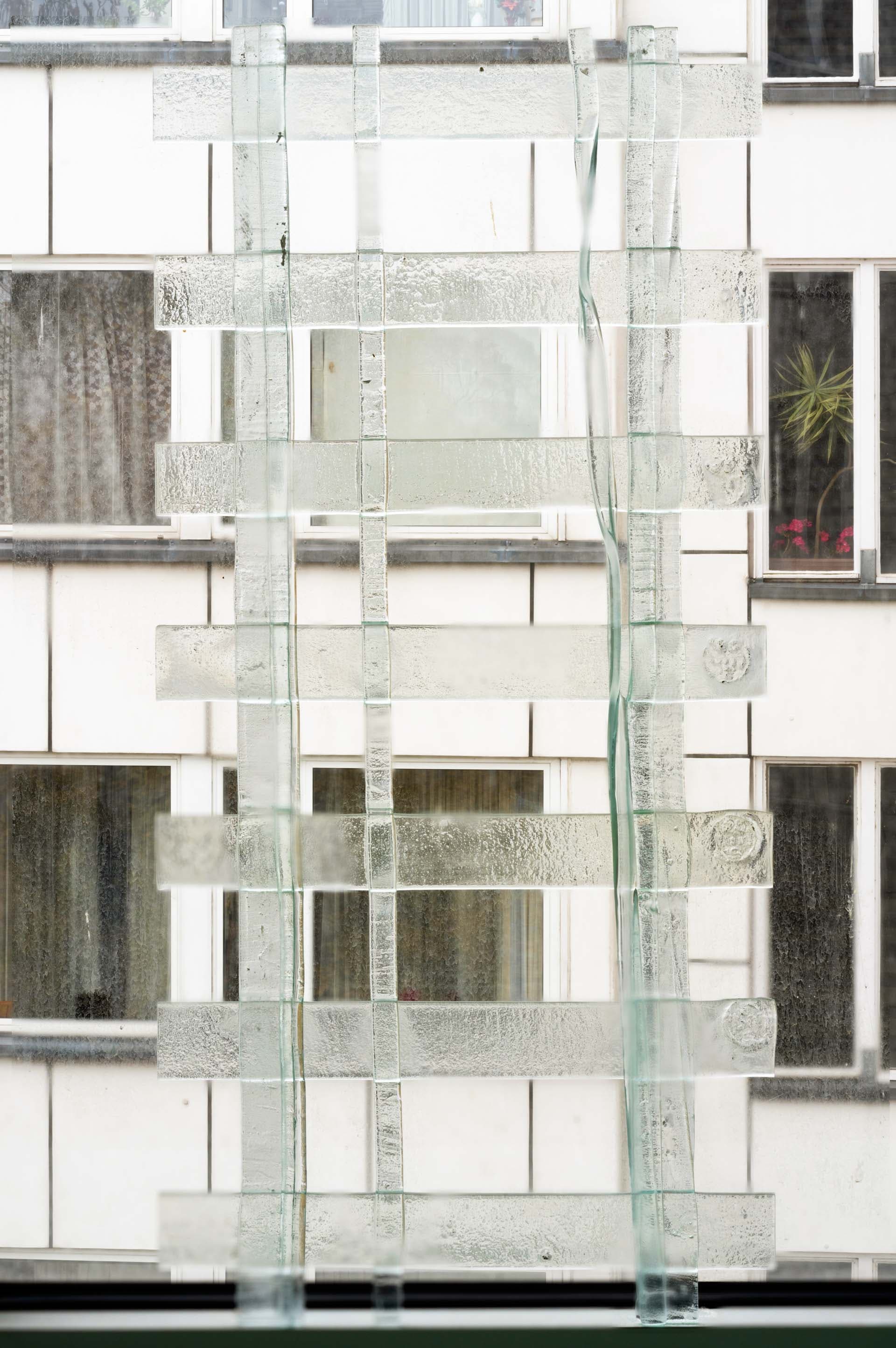
Marina Pinsky examines the way in which we can read images as material, spatial, and ideological models of the world. Using photography as a basis, she creates artworks in a range of media that expand lens-based ways of seeing into three dimensions, often using sculptural means. Her work has been shown in solo exhibitions at institutions such as La Loge, Brussels, BE (2023); Simian, Copenhagen, DK (2021); Kunstverein Göttingen, Göttingen, DE (2018); Vleeshal, Middelburg, NL (2017); Kunsthalle Basel, CH (2016); and in group exhibitions at HMKV Dortmund, DE (2025) and Kunsthalle Wien, Vienna, AT (2024); M Leuven, Leuven, BE (2024); Z33, Hasselt, BE (2023); Galerias Municipais, Lisbon, PT (2022); SMAK, Gent, BE (2018); WIELS, Brussels, BE (2017 and 2015); Kunstverein Düsseldorf, Düsseldorf, DE (2016); the Museum of Modern Art, New York, USA (2015); Hammer Museum, Los Angeles, USA (2014). Her work is in the collection of the Museum of Modern Art, NY. In 2026 she will present a solo exhibition at Galerie Greta Meert in Brussels and her work will be included in group presentations at KANAL Centre Pompidou in Brussels, Amant Foundation in Brooklyn, NY, and the Kölnischer Kunstverein, and in early 2027 she will open a solo exhibition at the CAC Synagogue de Delme in France.
Nell Zink grew up in the Tidewater region of Virginia. She did a variety of service and administrative jobs before becoming a professional novelist at age fifty. Before then, her publications were confined to an indie rock fanzine and short-lived blog, Animal Review. Her books to date include The Wallcreeper, Mislaid, Private Novelist (two novellas written for her friend Avner Shats), Nicotine, Doxology, and Avalon. Three of her books became New York Times Notable Books, and one was longlisted for the National Book Award. Her writing has appeared in n+1, Granta, and Harper’s Magazine. In 2022, she served as the Friedrich Dürrenmatt Guest Professor for World Literature at the University of Bern, Switzerland. She lives near Berlin.
All images courtesy of the artist.
finanziato dall'Unione Europea - Next Generation EU