The Discovery of Dust
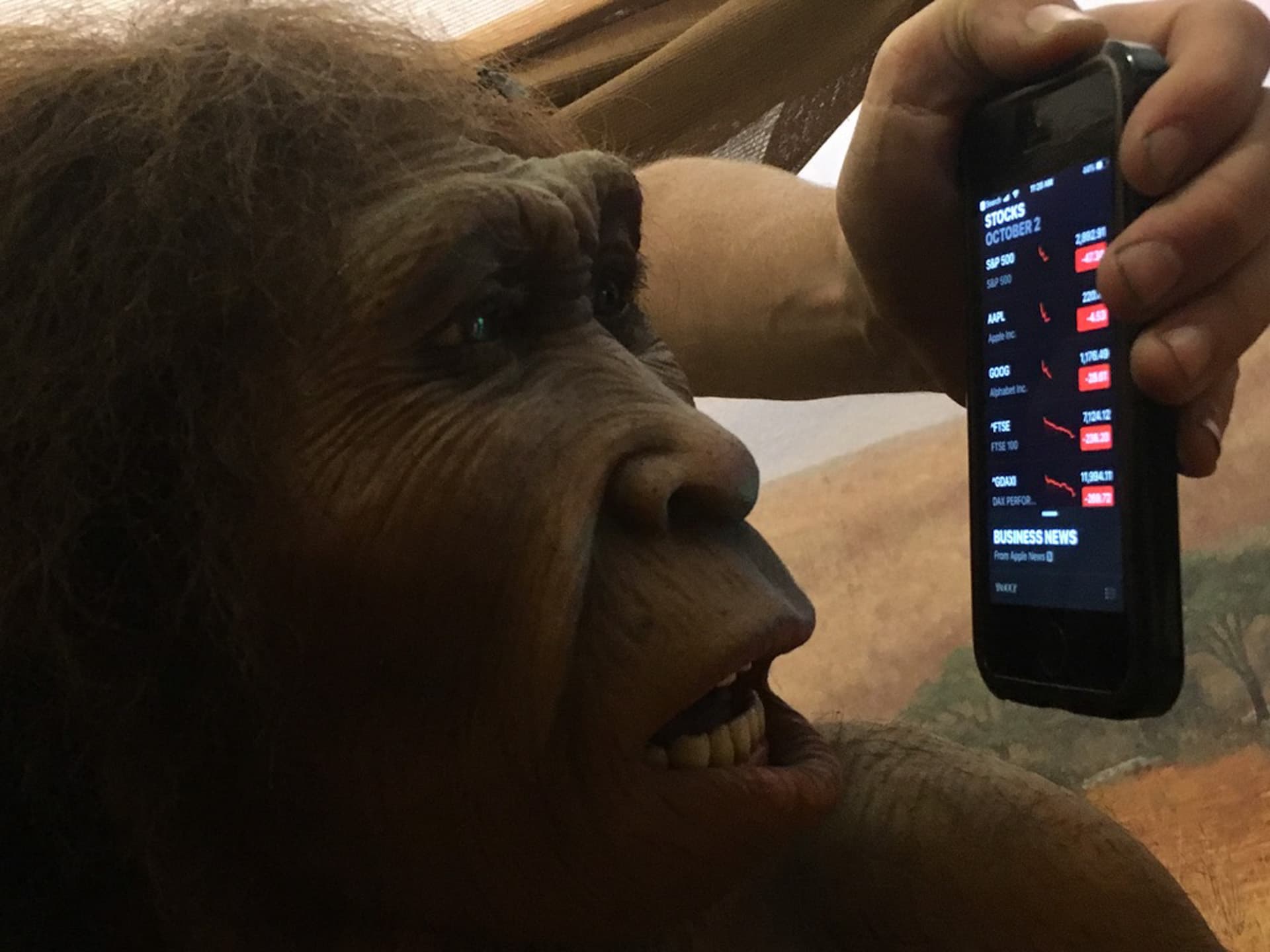
My first job at a natural history museum was dusting the four life-size tableaux in the Hall of Human Origins. We went chronologically, starting with the Stone Age (Homo ergaster) and ending with the present (Homo sapiens). Everything is extremely delicate. Early man is covered in hair, and several flies sit upon his skin. We had to vacuum the dust off and all around him, leaving every leaf, every hair, intact. Once he was dust-free, we showed him the stock market. It was all red, and you can imagine, he was shocked.
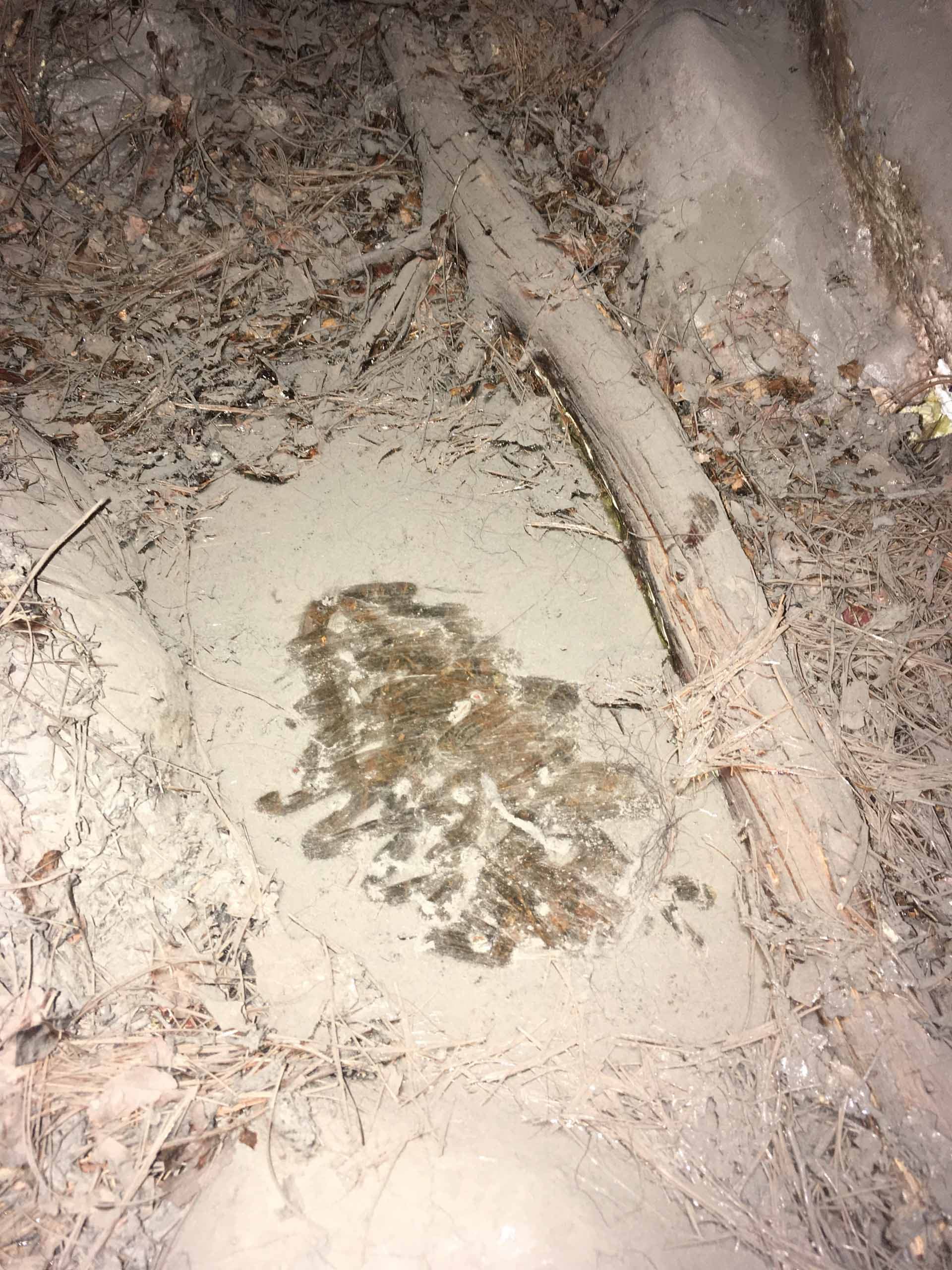
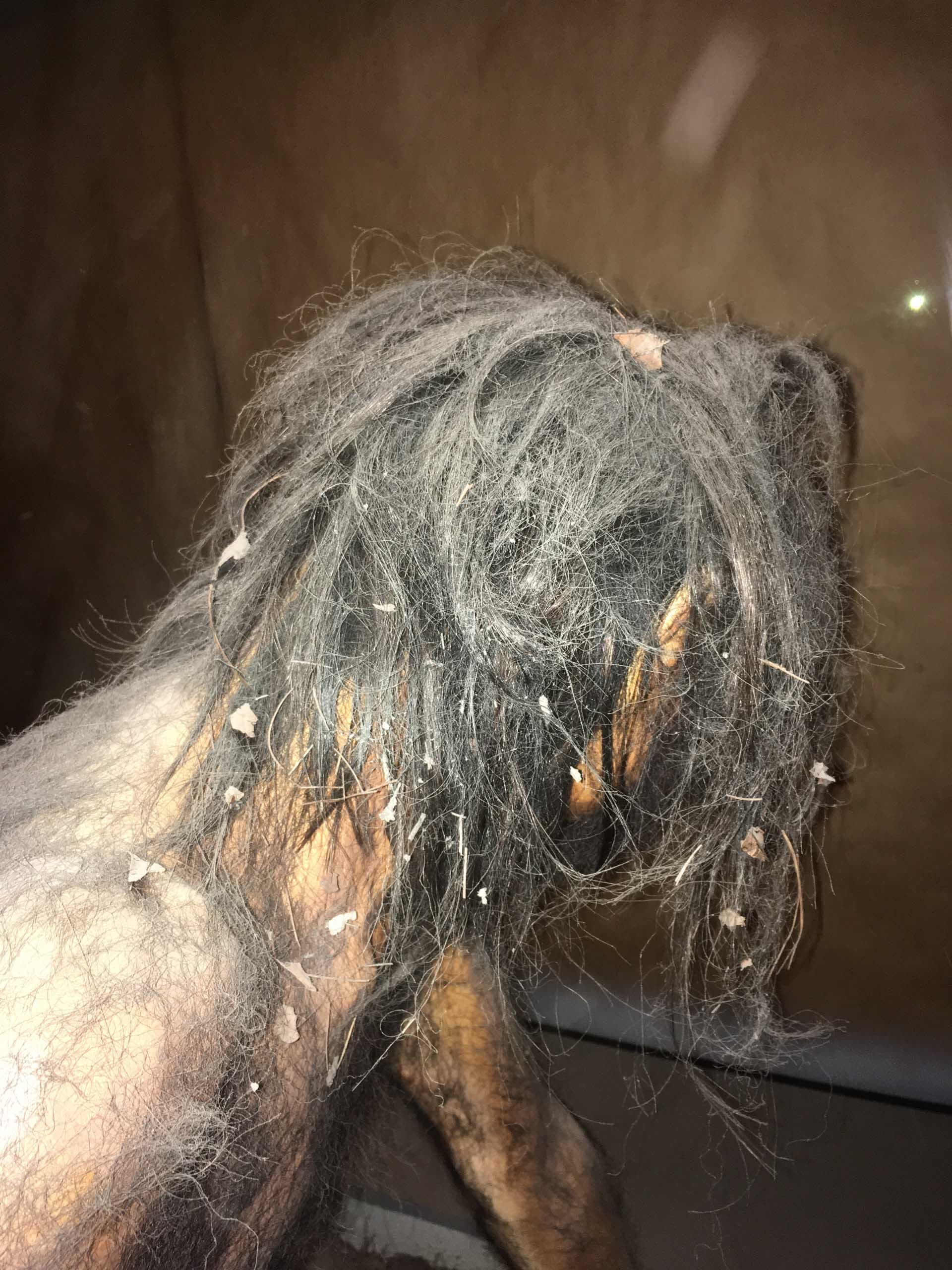
The water (resin) in the Homo erectus diorama was dusty and not reflective, as water should be. His hair was messy and dusty, with no mirror around.
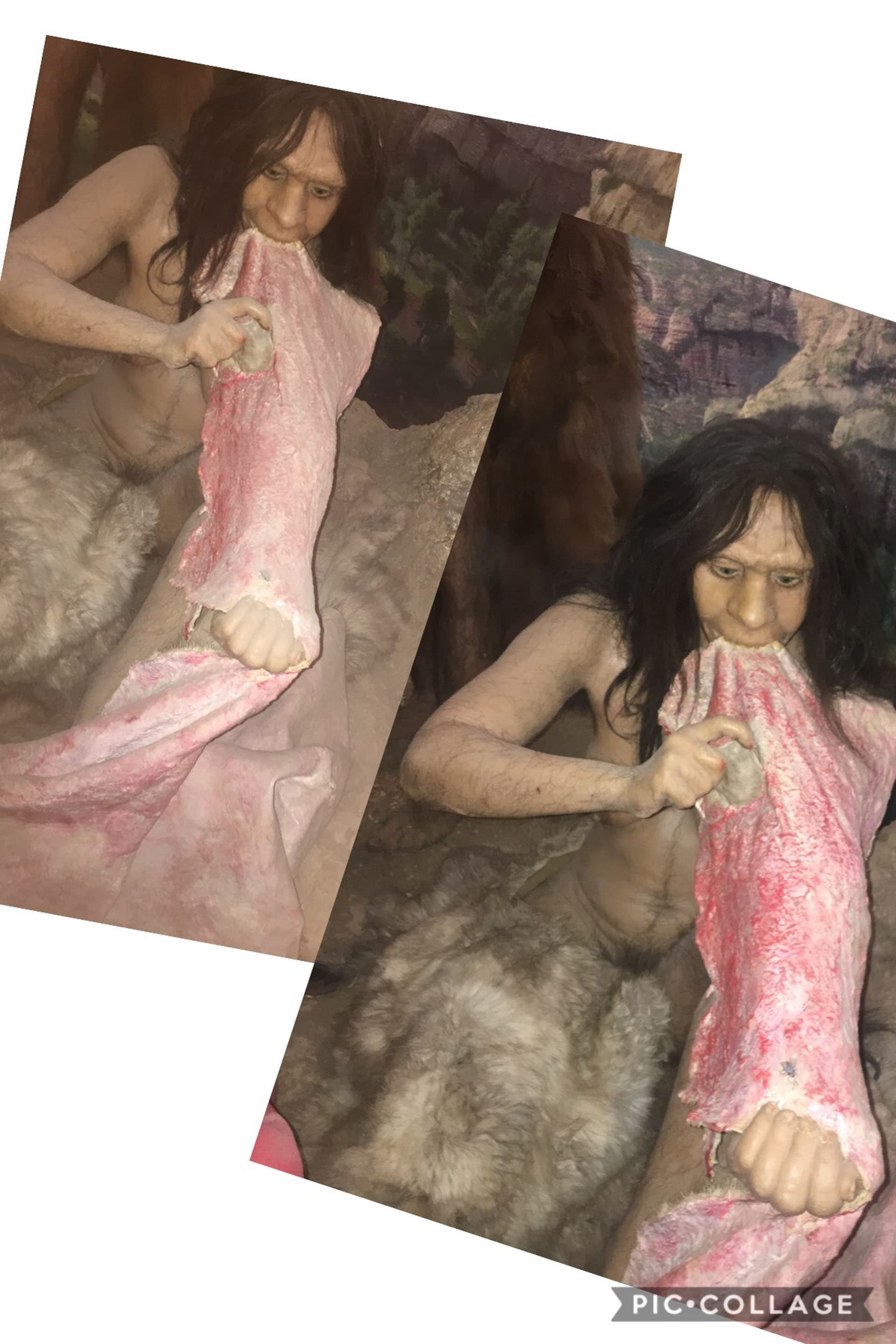
In the Homo neanderthalensis diorama, one million years later (WTF), we had to dust off the animal flesh they had hunted and prepared, from gray to appetizing. It worked, I think. See for yourself:
My coworker/best friend and I spent our days slowly, and with great precision, dusting the ancestors and their animal companions. Before entering the dioramas, we’d cover the large pane of glass framing the scene with brown paper. This prevented any audience from witnessing extant humans dusting the extinct ones. With our boss's help, we‘d pull up the painted backdrop that creates the illusion of depth and crawl in.
When we weren’t in the dioramas, we worked on our one-act surgical opera at a church on 66th Street. Nine cast members dressed in scrubs pretending the church was an Operating Room (a quintessentially dust-free space). The orchestration of liveness was quite a contrast. It became obvious: movement prevents dust. There is this line in Tennessee Williams’s The Glass Menagerie (1944): “Making up in motion what was lost in space.” I now understand it as moving just to be dust-free. In dusting all of these “things,” we were animating them.
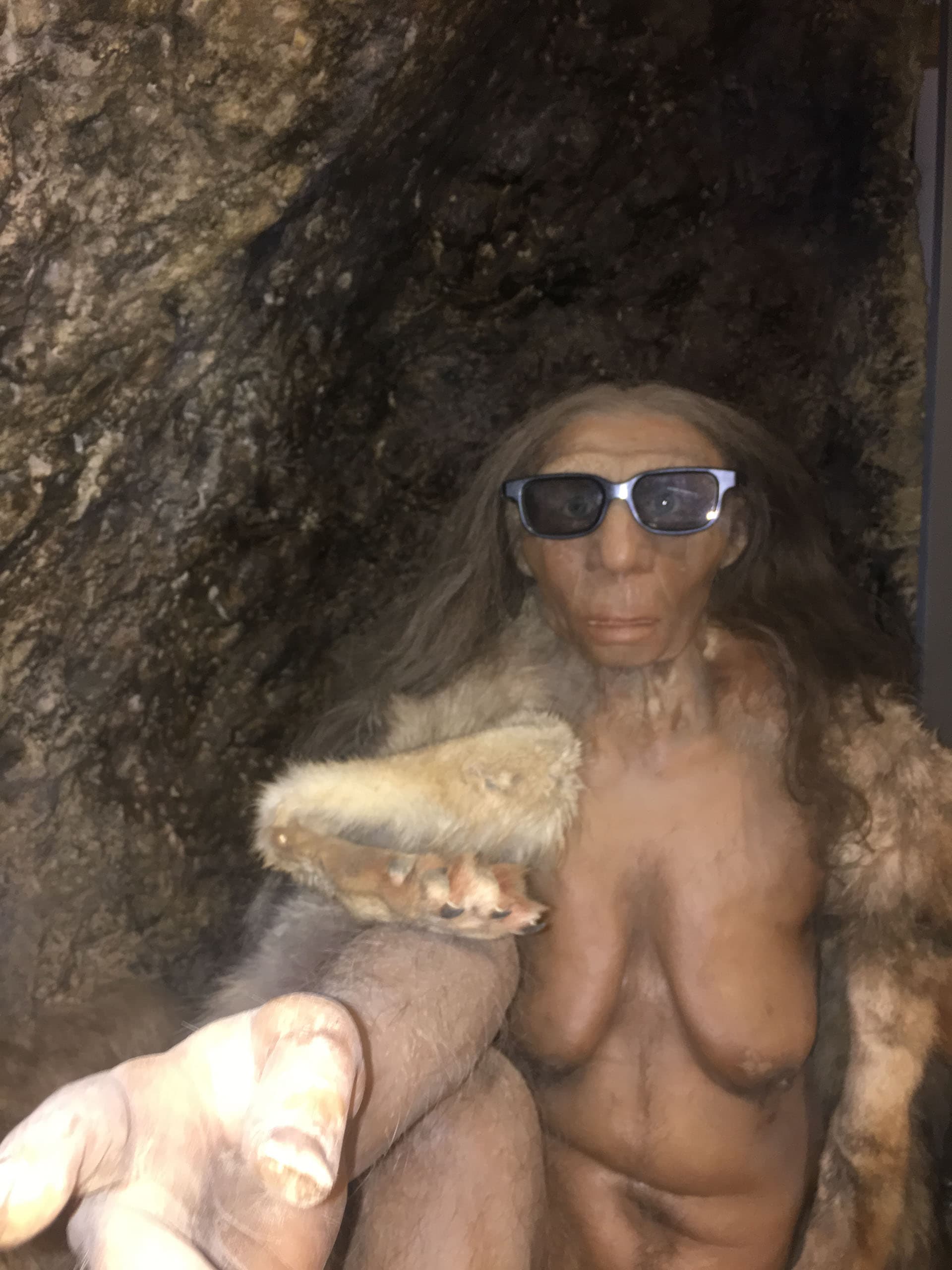
We put 3D glasses on the early humans once they were dust-free. “Welcome to the present” we said as we photographed them. They were like, “Whoa, what is this?”
After the dioramas were pristine, we moved on to The Wall of Life, a hundred-foot-long installation arranged into twenty-eight groups covering 3.5 billion years of evolution. I have cleaned The Wall of Life three times in six years. This summer was my third time dusting it, working with two new coworkers who were virgins to the wall. I focused primarily on the underwater world because it is the most delicate: shells, shrimp, algae, mollusks, crustaceans, sea anemones, you know. This part of The Wall of Life is mostly real stuff dried up. The shells are easy to clean, but they are hung precariously. The starfish and urchins have a texture that makes it impossible to sweep dust off with a brush. Typically, the technique for delicate dusting is brushes of various sizes and a Nilfisk vacuum cleaner—vintage Danish design with a knob for an adjustable suck rate. In addition, the museum has a new powerful electric blower, a small tool that generates quite a lot of wind. It helps a lot with the textured sea creatures that were never meant to encounter the light of day, except through depths of shimmering water.
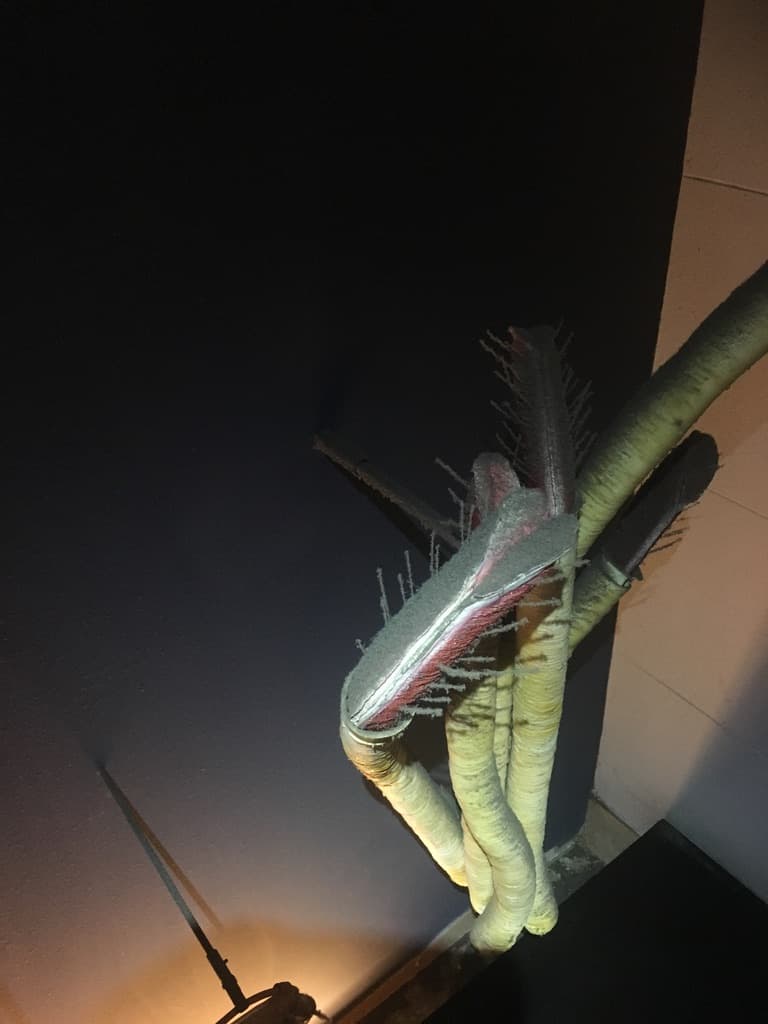
Despite it being my third time cleaning this wall, I am still blown away by how bizarre it is to see all of this stuff covered in dust. It is no surprise the parts are so difficult to clean, given that their shapes, bodies, and souls are made for supple movement in constant currents of water. No dust gathers at the bottom of the sea. They undulate in the breeze that is the ocean current, tides pulled by the moon as the Earth spins on its axis. Dusty starfish, dusty sea anemones, dusty cnidarians. Nearby is the stuff that looks like the inside of a body but is part of the seafloor. The sea body, my own body dusty, my own dusty body.
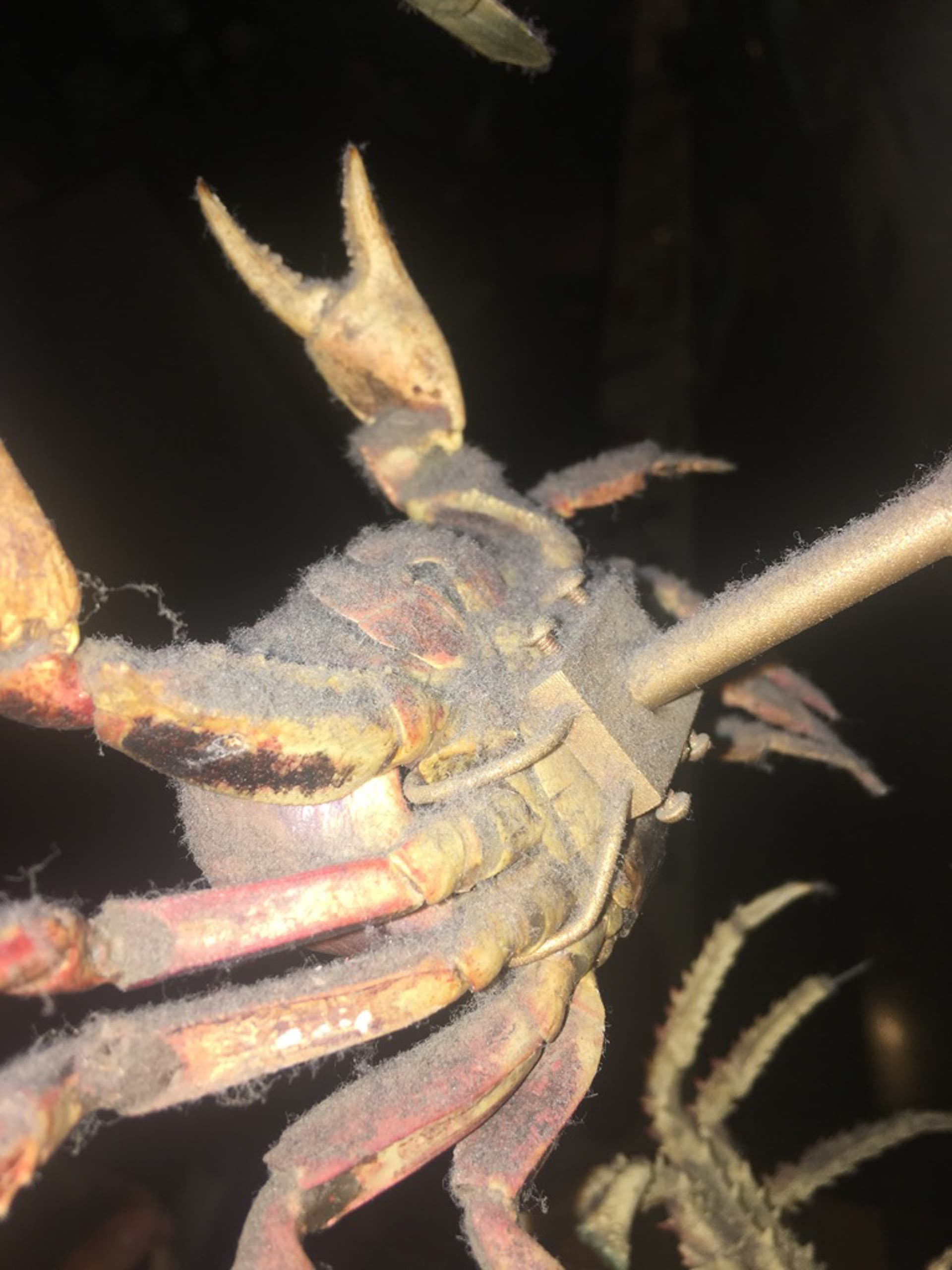
I was in the middle of cleaning The Wall of Life for the first time when I took my first cruise. It was a Carnival Caribbean cruise in late October 2019. It was also my mother’s first cruise; she’d invited me to join her and three of her hometown friends she’d just reunited with via Facebook after almost fifty years. All of these women left Spain in the seventies after meeting American soldiers and moved to Florida, Arizona, and Kansas. Naturally, they had each brought their husbands. My mother, who did not leave Spain with an American soldier in the seventies but with four kids and an introverted engineer in the late nineties, brought me. All of them were friendly and fun like my mom.
To counterbalance the overwhelmingness of the day, I would drag my twin mattress out to the balcony and sleep there most nights. The boat was fun, surreal, but also oppressive. We dressed up every night, drinks flowed, we danced, and during the day, we tanned on ‘exotic’ beaches. Still, it magnified and congealed the excess consumption and empty notions of joy, desire, and pleasure around which we build our attempts at a meaningful life. This was a stark contrast to the underwater world I experienced on day three, when we stopped at some Caribbean port, and I snorkeled for the first time. I’d thought one had to scuba dive to see such depths, not just dip your head under the surface. I was wearing a life vest, and it was close to the shore, so I understood my relation to the seafloor. The goggles I wore were crisply clear, and I had my contacts in, too. My body taken care of; I was only a set of eyeballs moving through clear liquid. No thoughts in my brain except looking, and I kept on, kept on, kept on looking.
For the next week, every time I closed my eyes, I tried to be there again. If someone had told me this was life after death, I would have said, "I’m ready to go".
Back on the boat, I began shooting a body-horror film on my Sony Handycam that my mother’s friends generously improvised for. The rest of the time, I was filming b-roll that later became a stoned exercise in splicing images to fit sound (rather than the usual adding sound to image), with results and cruise mood here.
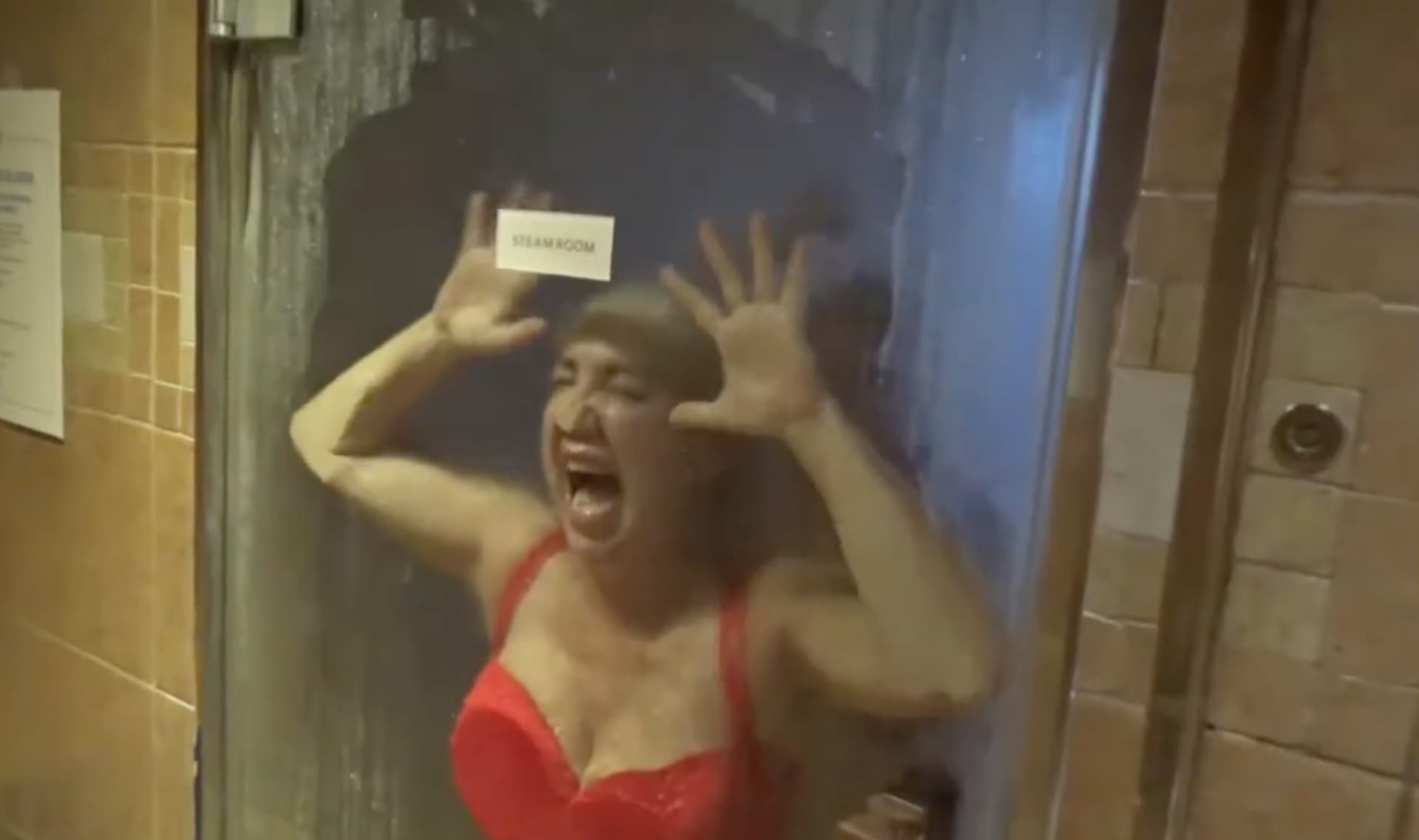
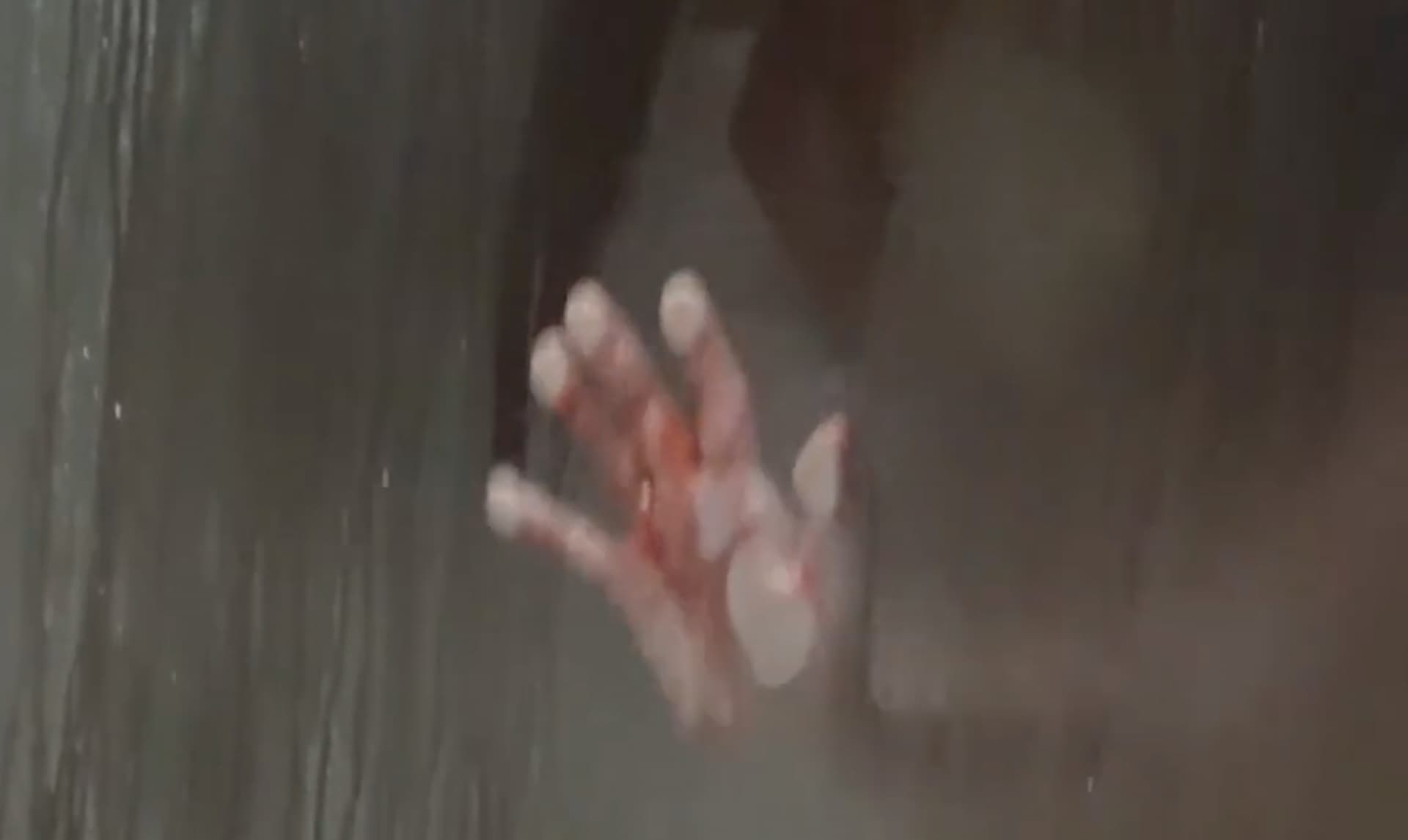
(The body-horror turned into a Dante’s Inferno mash-up after I realized that the Emergency Evacuation Map hanging next to the elevators very much resembled the diagram describing the circles of hell.)
Underwater, there are parallels to dust: sediment, plankton, microplastics, bits of algae, mineral particles. They float through the water, sometimes settling and eventually forming sediment, a sort of equivalent to the pollen, dirt, bits of leaves, and trash particles that float around where there’s a breeze. There is a distinction between the type of dust that’s been around since the beginning of time and the dust I am cleaning. Dust in interior spaces is made mostly of skin flakes, dander, and new fibers from the last two centuries—a sort of semi-synthetic dust that requires HVAC and shelter. Then there’s the type of dust that bumper stickers brag about (“We are made of stardust”), which is probably closer to original dust. The dust in these photos is synthetic. Dust as we have come to know it, closer to dryer lint, not dust as it gathered on Stone Age man’s tools in his cave.
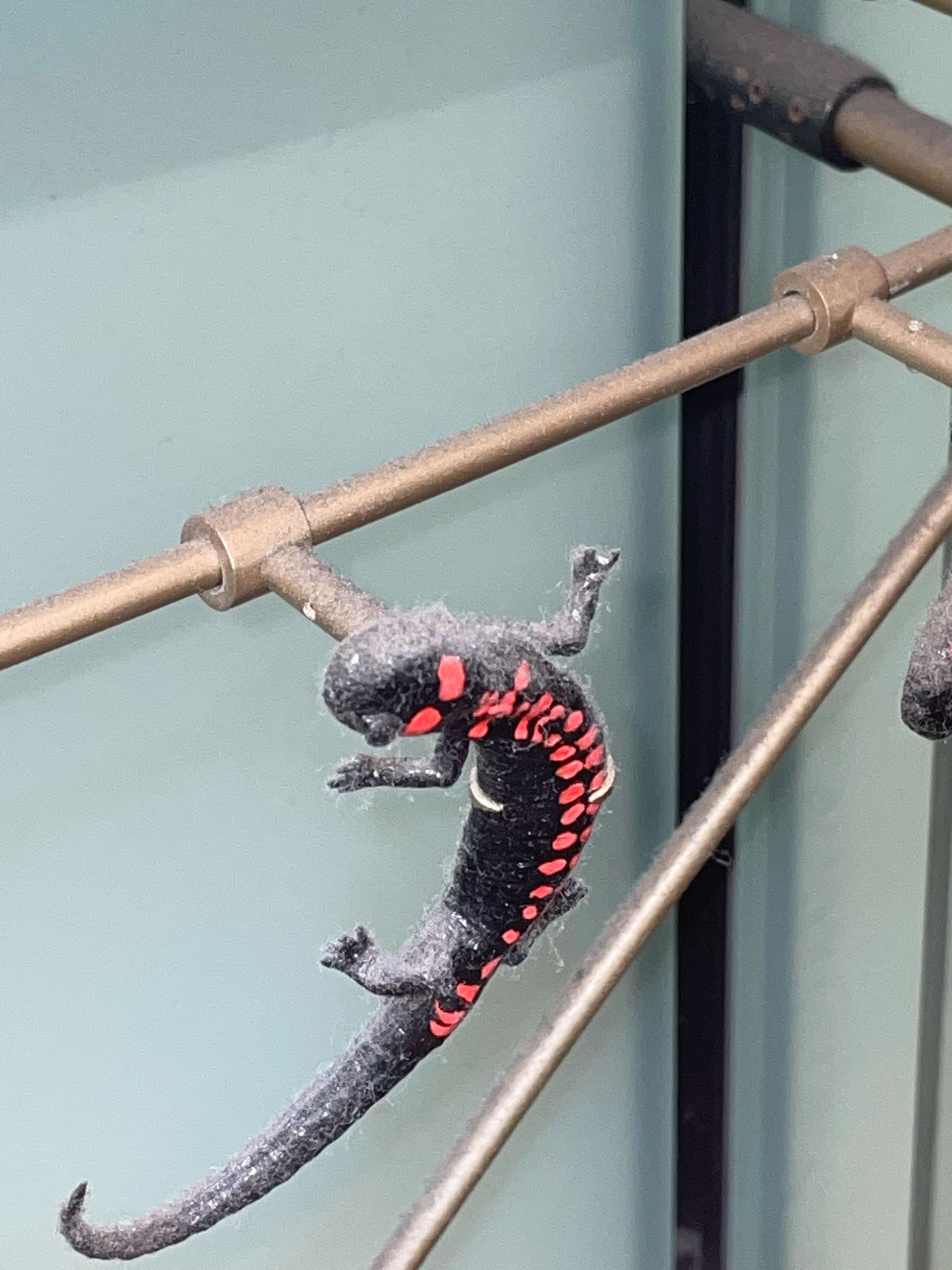
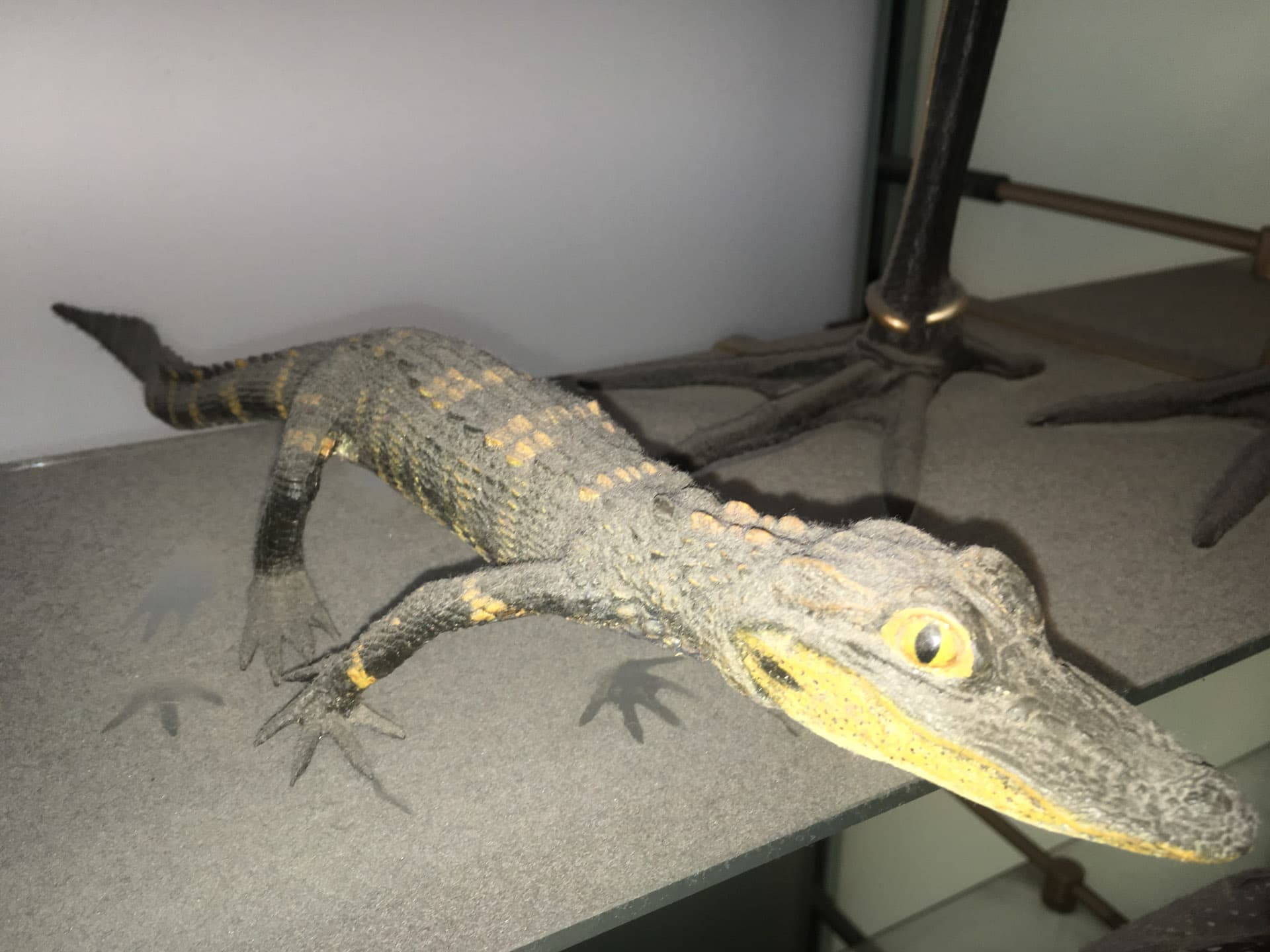
Not even speedy lizards can avoid the Dust of Today.
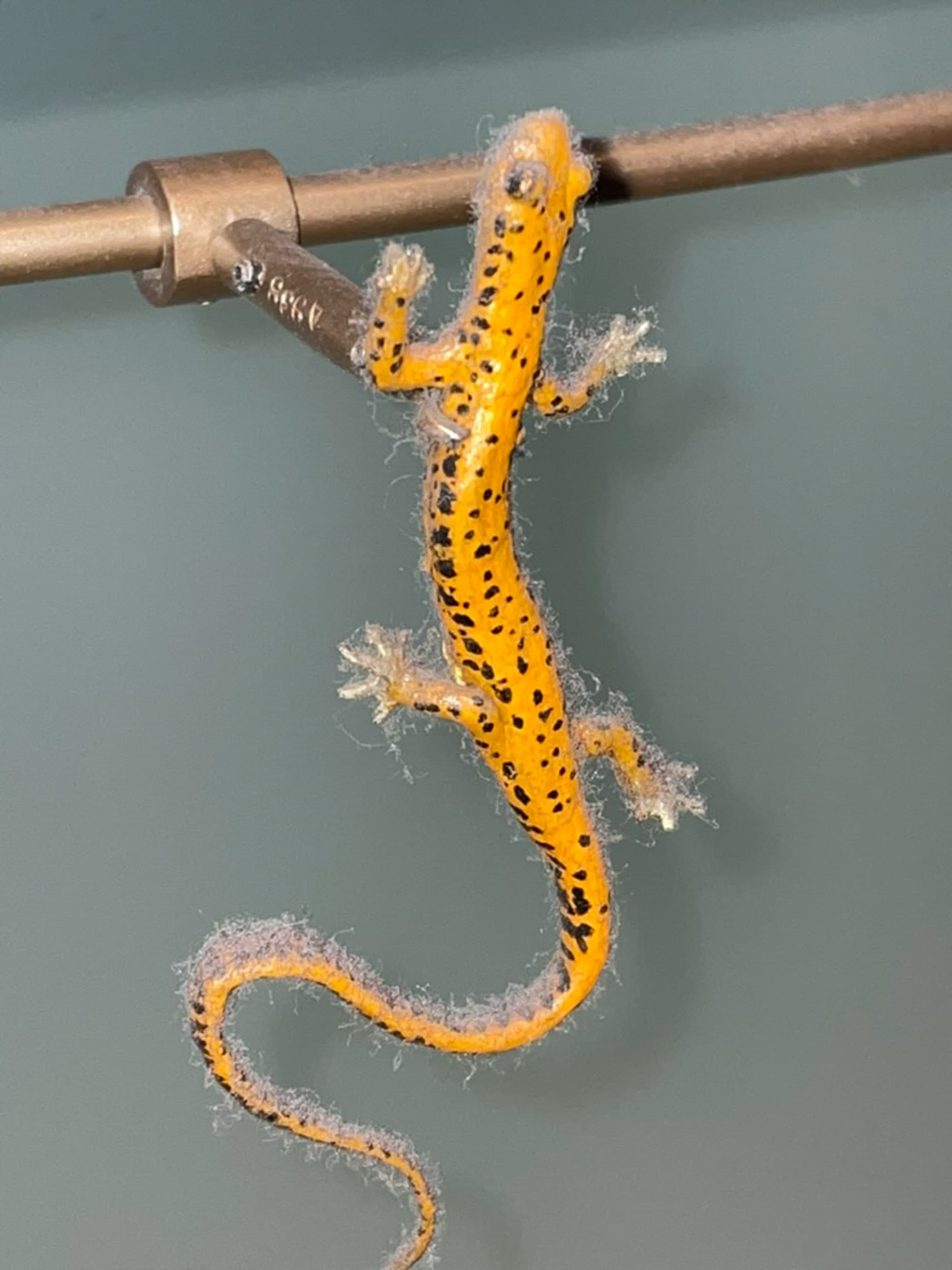
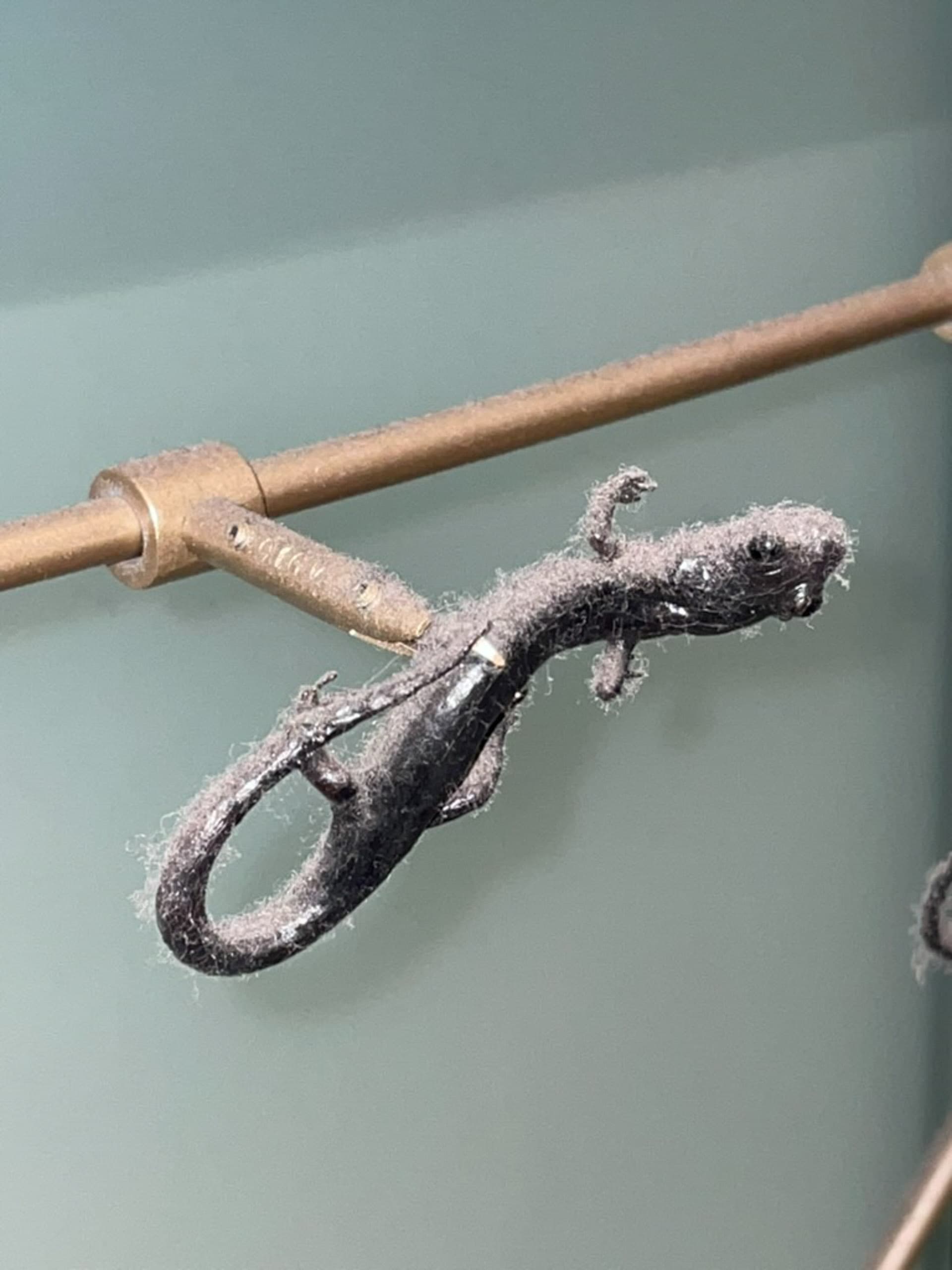
The Dust of Today needs architecture and interior spaces—a unique combination of airflow and low circulation. An airtight space with no circulation gathers no dust, but seemingly airtight is often not technically airtight, so dust gets in. — At the very beginning of sound in cinema, a movie called The Wind (1928) was released by Metro-Goldwyn-Mayer. The film has no dialogue but employs the then-new technology of sound recorded on a disc—a synchronized soundtrack with music and sound effects. The movie features Lillian Gish on a train from Sweetwater, Texas, constantly bothered by the film’s true lead: the wind. Invisible wind animates objects. It feels like an inside joke that changes in air pressure generate sound, which, on a larger scale, becomes wind. Wind keeps the dust away, except for windstorms, which in some places turn to dust storms. Inside a closed shelter, one is typically safe from this dust. You block the wind, which in this case brings the dust rather than clears it. In the movie, wind is understood only through the things it impacts.
Most sculptures outside are not animated by wind, though they are kept dust-free by the weather. The best way to see sculpture is outdoors, in extreme conditions, or at least when it’s raining.
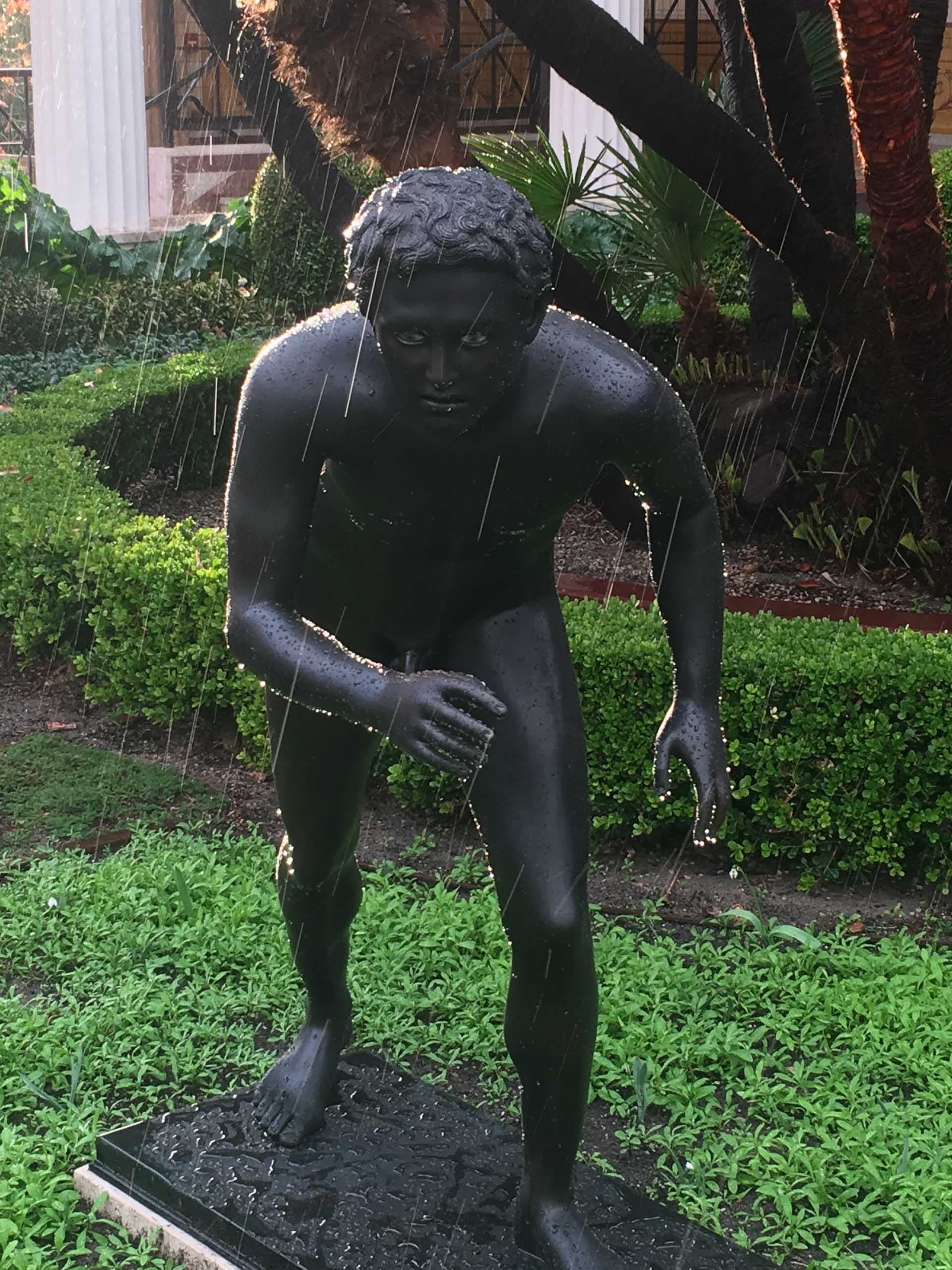
It has to be a static sculpture, and it's best if it's a very strong material, like granite, marble, or bronze. The rain, snow, or hail makes it impossible not to notice that you are sharing space with this thing, coexisting and experiencing the same conditions. The rain falling on you is just as much falling on the sculpture, and so you are palpably intertwined in the present. As we know from frame rates and flip books, animation is not really about motion; it occurs in the mind.
Last week in LA, I saw a dusty Brancusi.
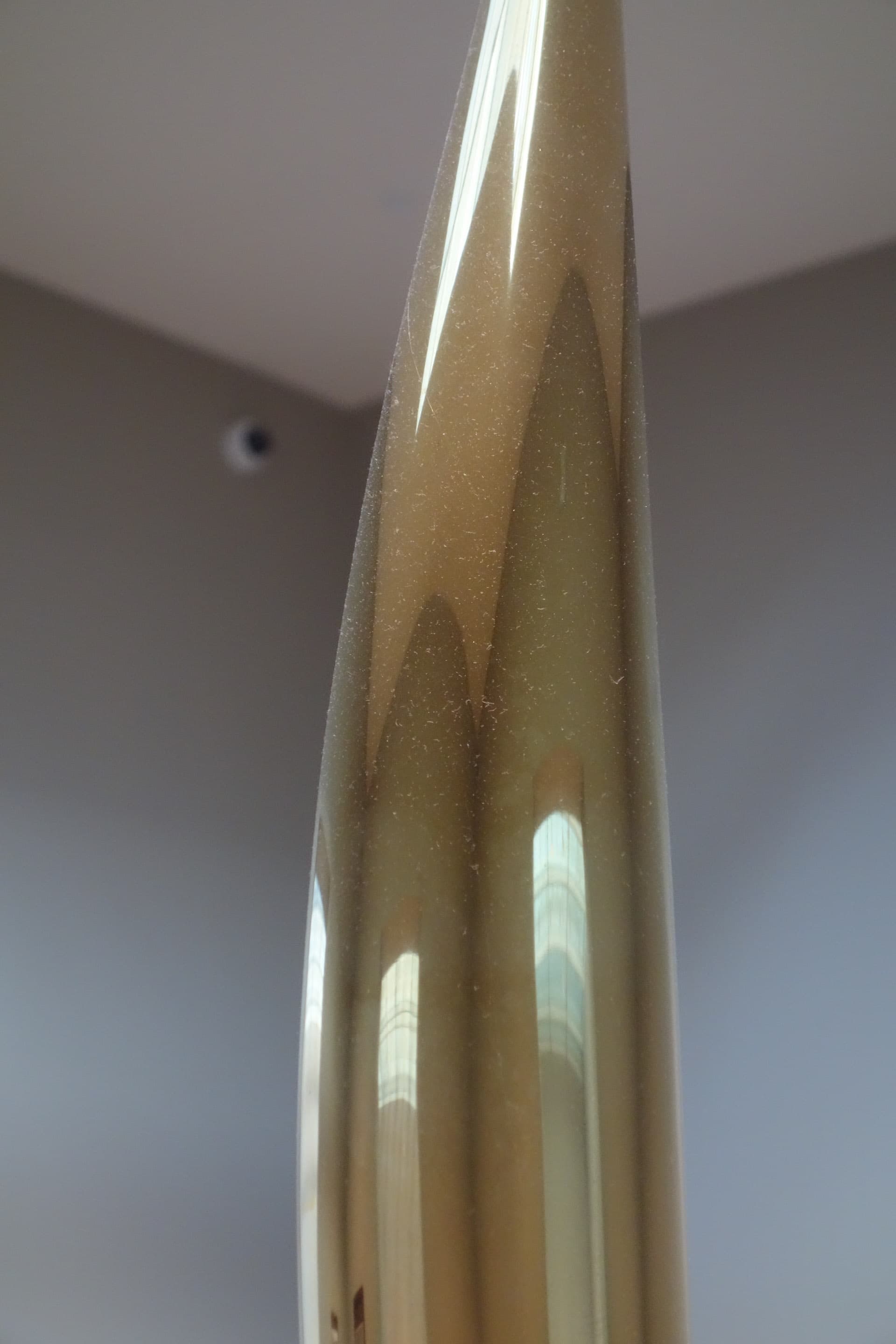
A gentle powdering is visible only to those looking for it. I thought of a story I had recently read about another dusty Brancusi. A photographer came to photograph sculptures in his studio. The photographer covered his sculptures with a light powder to prevent reflections. The artist flipped out. In fact, from then on, he took all his own photographs, built a darkroom in his studio, and never permitted another photographer there until the end of his days (except for Man Ray once or twice).
Brancusi’s polished surfaces aimed to dematerialize the sculptures; for him, photography was an extension of this dematerialization, turning form into light and shadow. The photographer’s dusting effort was an attempt to isolate and freeze the work. To fragment it from the movement of the studio. It is important to note that Brancusi kept it moving with his sculptures; they were modular and came in variations. He used the camera to capture his ‘group mobiles’ within his studio, their many versions and shifting arrangements. “Why, it is my studio. Nothing fixed, nothing rigid. All these blocks, all these shapes to be shifted and juggled with…”
Artist Iñigo Manglano-Ovalle put Constantin’s Bird in Space in a wind tunnel, moving at ten times the speed of sound. Somehow, the opposite of the speed of dust. No surprise the bird was extremely aerodynamic. The photographs taken from the window into the high-velocity chamber show the “bird” in a horizontal position. A wispy line curves downward from the point where the airflow intersects the sculpture.
Wind or no wind, sculpture has always been a perfect muse for photography. It's still, and often reflective (plaster, marble) surfaces permitted its capture. For humans, it was harder because of the technology at the time. If you wanted to be rendered, you had to be very still; otherwise, you ended up blurry and ghostly.
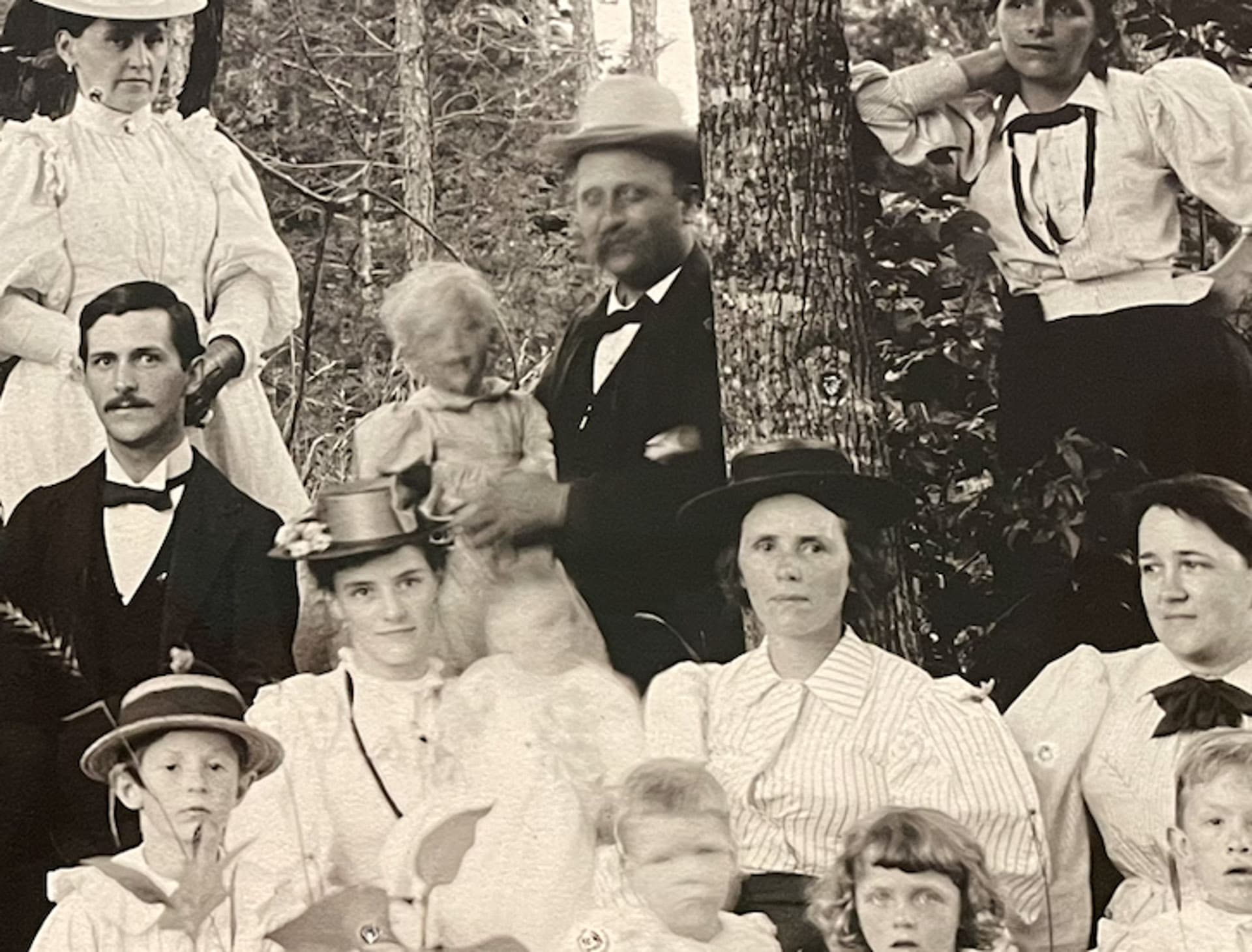
Photo of a photo by Hugh Mangum (1877–1922)
If the camera had functioned like a bug or a bird’s eye, it would always have been sharp. Their Flicker Fusion Frequency, or the speed at which they see light, is way, way higher than ours. Persistence of Vision, the phenomenon where the human eye retains an image on the retina for a brief moment, is typically about 1/20 to 1/30 of a second. This is a founding principle for how still photography gave way to moving pictures. At 24 frames per second, the human eye perceived “motion”; this became the industry standard. We invented the camera to match our own and not theirs (bugs, birds, toads). Often at the museum, I stop by the newly built insectarium and admire these small beings. One summer day, I had an important experience that was useless to describe, so I wrote a poem immediately after work.
TODAY
I communed with a grasshopper
I wanted to cry
I wanted to live
I wanted to die
6. 12. 25
It was an Eastern Lubber, the largest grasshopper in the United States, native to the southeastern United States, Mexico, and Central America. With a Flicker Fusion Frequency of 60-100 Hz, Eastern Lubbers see things at 120 frames per second rather than our 24 frames per second. Likely to them, we feel like sculptures do to us. Or at least extremely slow. Because Eastern Lubbers are toxic and do not rely on speed for survival, their frame rate is much slower than that of a mosquito, which sees around 300 frames per second. This, paired with their compound vision (hundreds of lenses, almost 360 vision), means a movie for a bug would look extremely different.
To a mosquito flying in the rainy scene between a figurative sculpture and a person, it would just be a matter of changes in tempo. Probably to the Lubber, I lasted as long as some buildings last for us. (Thinking specifically of the original Pennsylvania Station in New York, which was built in 1910 and demolished in 1963…RIP). In the earlier photograph of the sculpture running in the rain, both the rain and the sculpture are rendered still by the camera. If the photo were a paused video and we hit play again, it seems possible that both the rain and the sculpture would resume. Or maybe this would happen for a Cane Toad, whose Flicker Fusion Frequency is at the opposite end of the spectrum and sees everything connected, in a slow, smooth flow (rain as a thick mist and the sculpture on a treadmill covered in it). Note to self: make movies for bugs. The next day, I stopped by to take a commemorative photo.
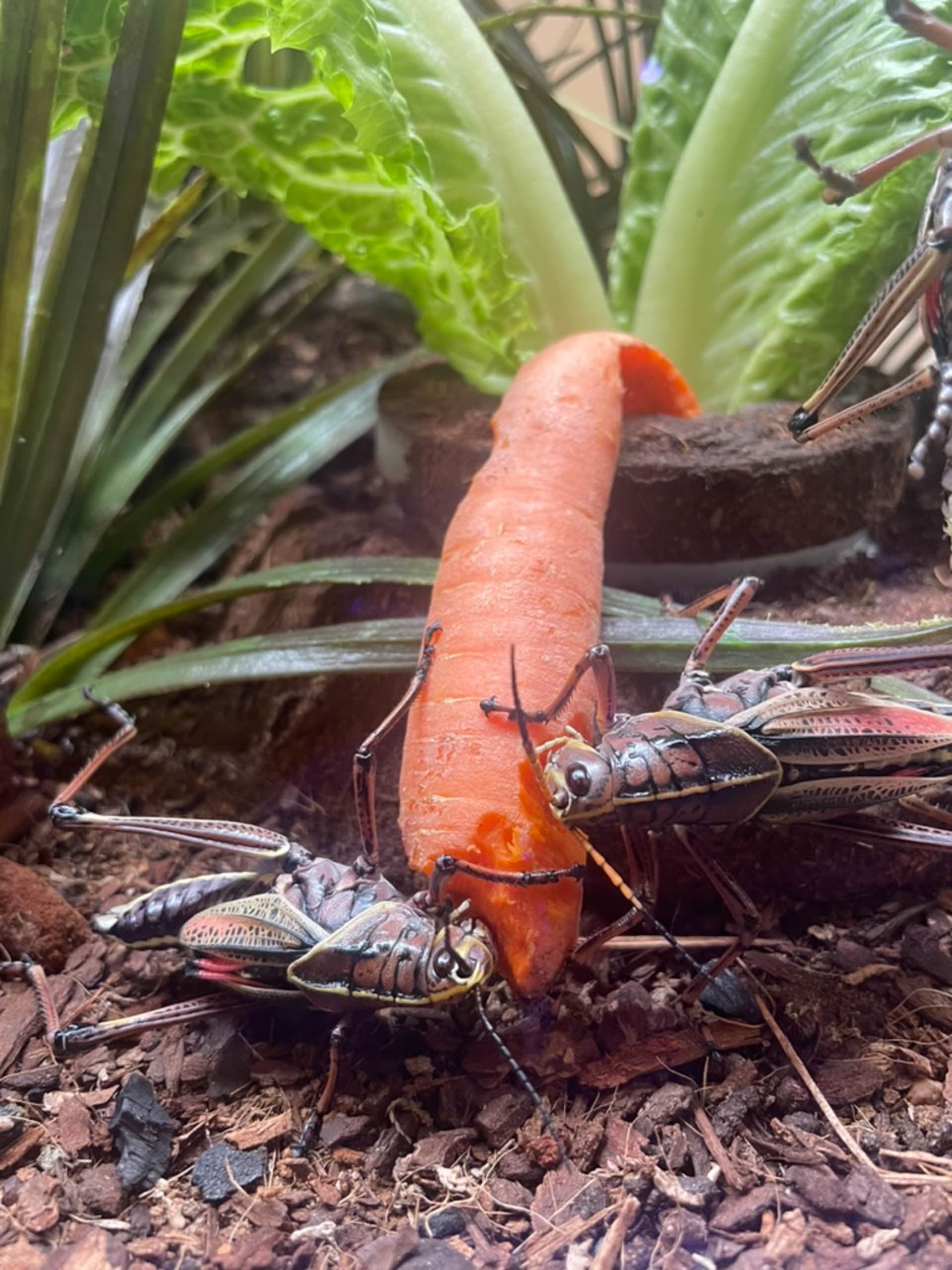
The Lubber was posing with a friend in a tableaux vivant, echoing a painting I had felt close to and thus photographed in Berlin earlier that year.
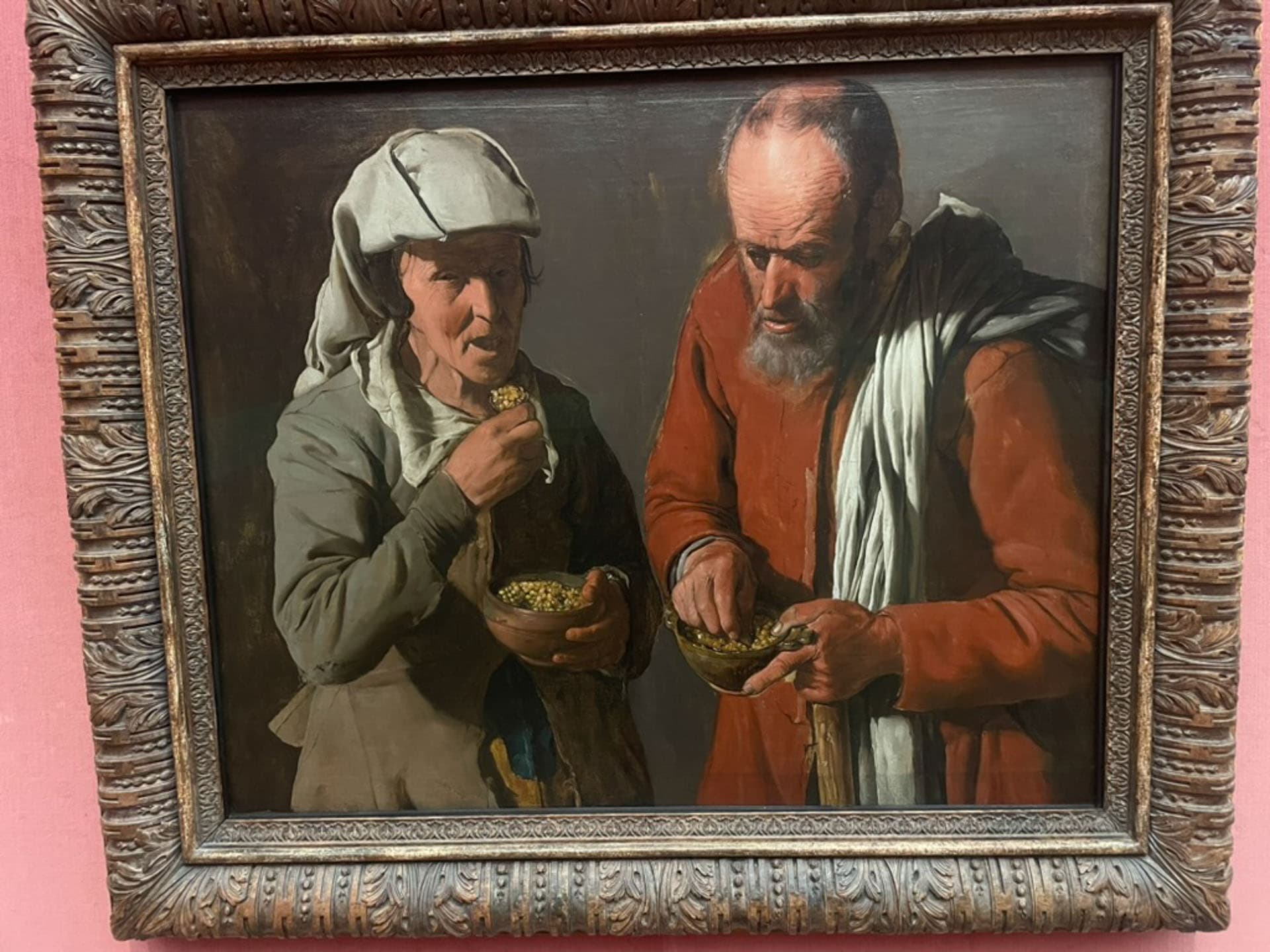
Peasant Couple Eating Peas by Georges de La Tour, ca. 1620
To cut through time from 1620 to the present was as dust-free as you could be.
This morning, when I arrived at the museum, I walked slowly toward the rainforest diorama to continue dusting the individual leaves. It was my third day dusting this 2,500‑square‑foot walk‑through diorama of the Dzanga‑Sangha rainforest. The elaborate installation is the result of several expeditions undertaken by curators, mammalogists, ornithologists, and exhibit designers to the Central African Republic in the late 1990s. They collected plant specimens, made casts, recorded insects and mammals, and filmed videos. It is a unique replica, featuring more than 160 species of plants, animals, and bugs. I spent my thirty-sixth birthday dusting these copied leaves, one by one, wearing a headlamp, a chip brush in one hand and a vacuum hose in the other. It is slow, tedious work, and I had started an audiobook of Ernest Hemingway’s A Farewell to Arms, chosen mostly because it was free on Archive.org. It’s peaceful, and I barely heard the vacuum over the narrator’s voice that begins, “In the late summer of that year, we lived in a house in a village that looked across the river and the plain to the mountains. In the bed of the river, there were pebbles and boulders, dry and white in the sun, and the water was clear and swiftly moving and blue in the channels. Troops went by the house and down the road, and the dust they raised powdered the leaves of the trees.”
I stopped cleaning the dust off the leaves, listened to the paragraph again, took off my headphones, and sat down.
Stunned like this critter, I was.
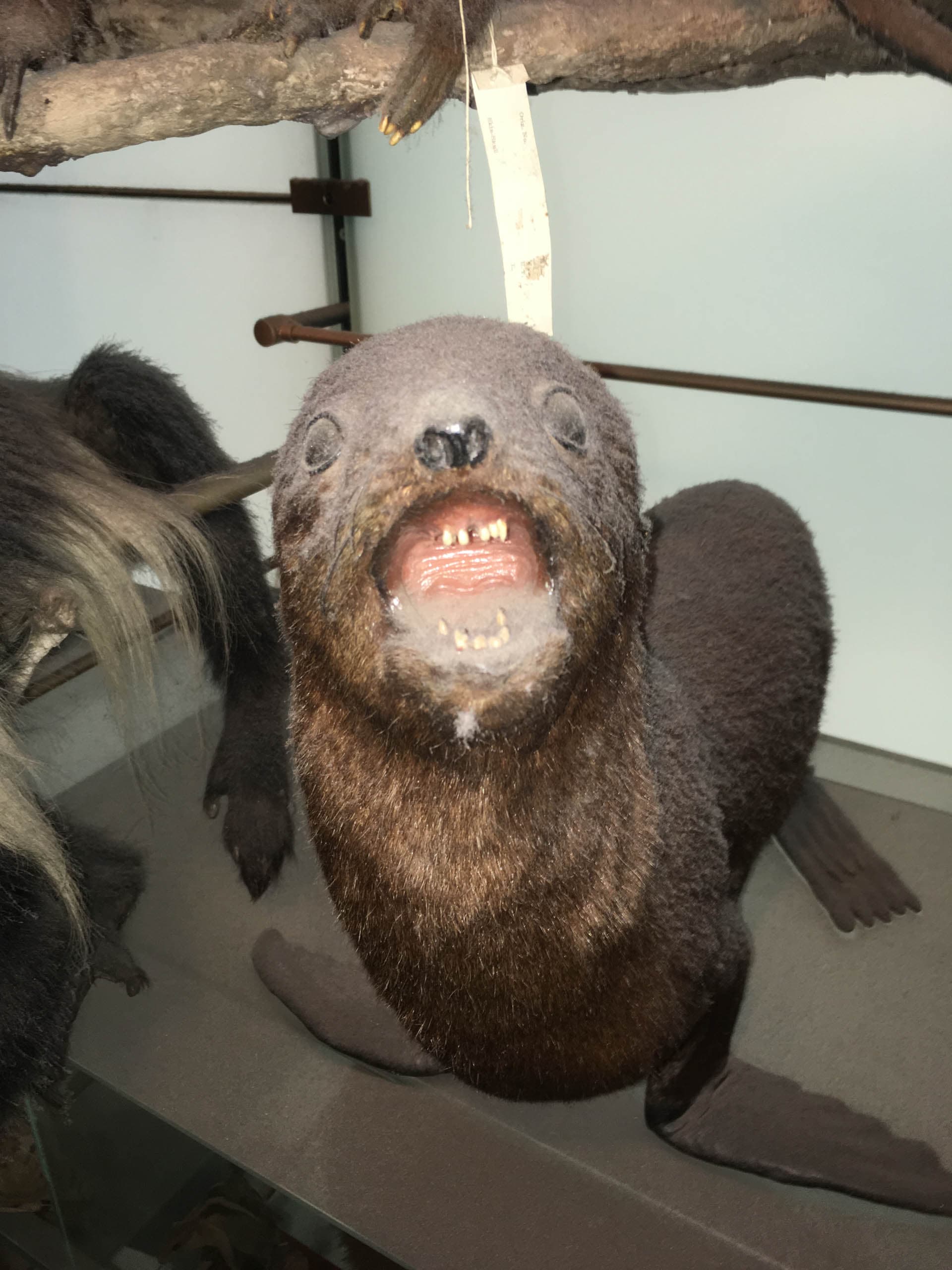
I decided to make a detour and see things I don’t dust. It was my birthday after all. I stood in front of the small mirrored dioramas of dinosaurs in the New York State Hall.
These dioramas are unique in their construction because they utilize a mirror at a 45-degree angle to reflect an image toward the viewer. The viewer sees the image, in this case, prehistoric scenes of the museum’s site. Not visible is the reflection's origin: a three-dimensional model, a layered image made of paper, dirt, and watercolors, housed inside a glass box.
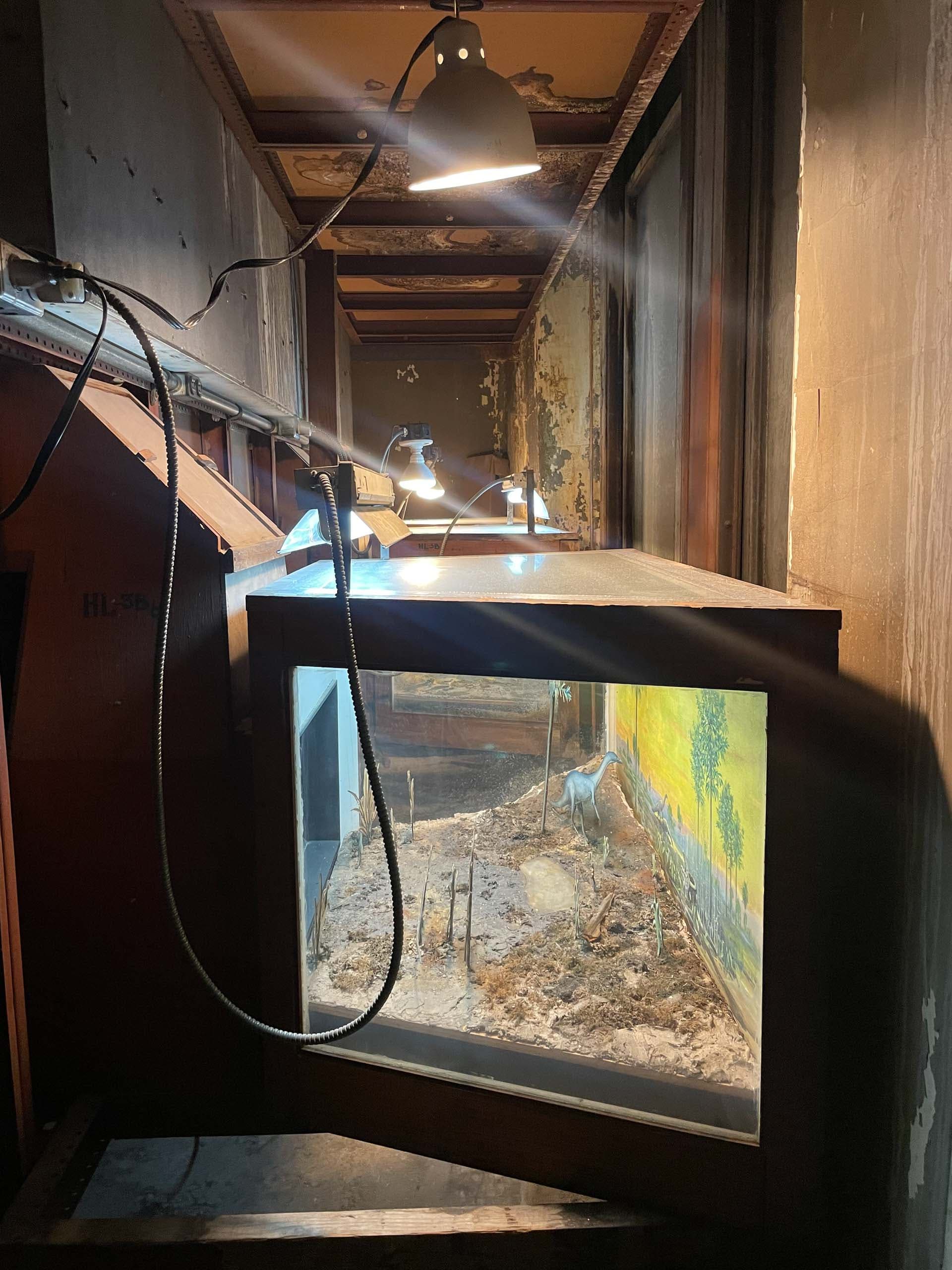
It is behind the display wall, out of sight. The distance between the viewer, the mirror, and the diorama shrinks the image of the original, which is actually four times its perceived size. This shrinking allows for a richness of detail otherwise impossible at a smaller scale, so it conveys a sense of density and a feeling of something unplaceable, as if it exists only as an image. The images are very beautiful, in that you know you are not looking at a physical object, but not so dramatic that they’re right away impressive. Some dioramas are larger than others and, depending on their positioning, involve more than one mirror.
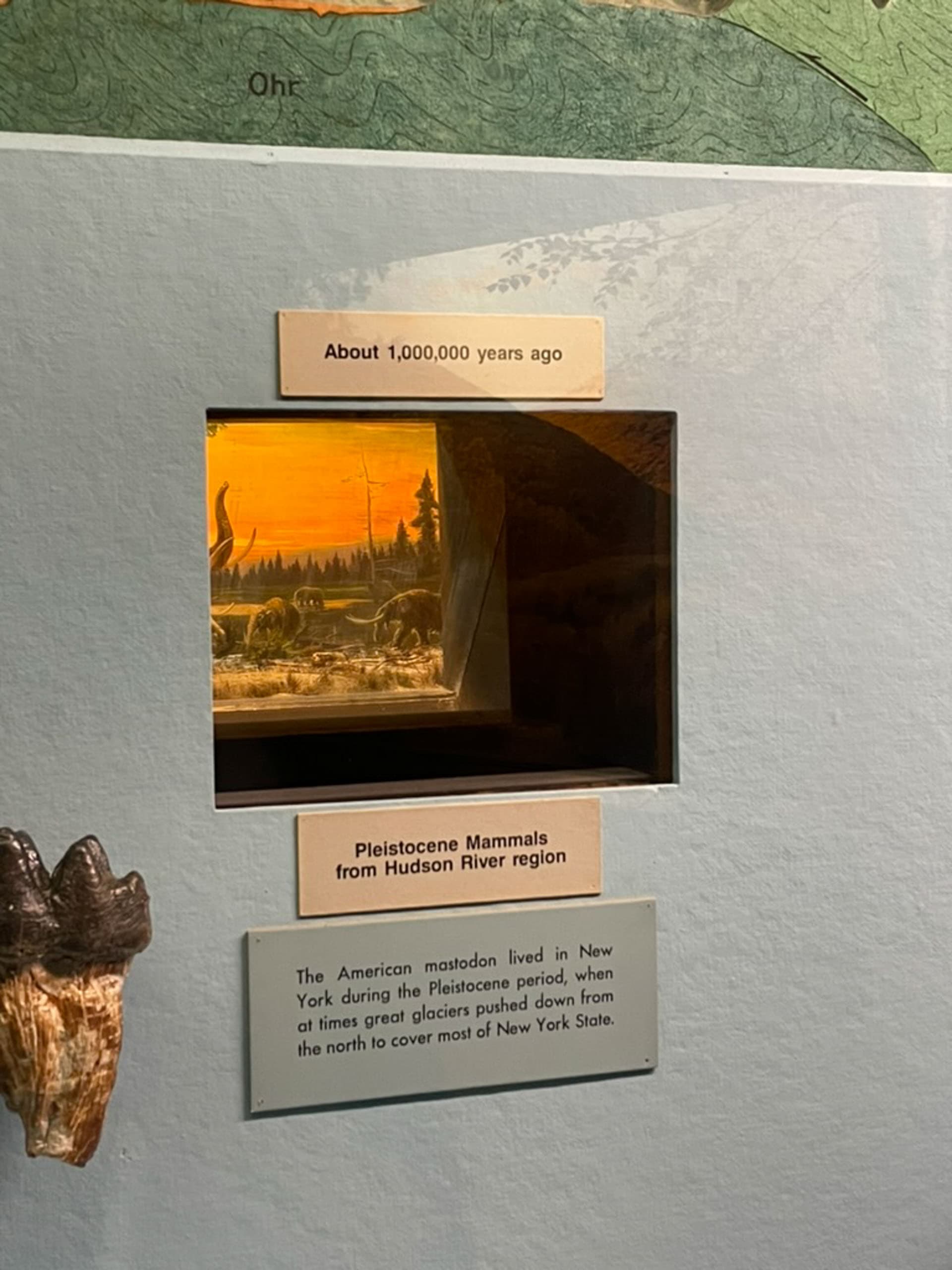
The mechanics of these boxes are not unlike those of early cameras. Though instead of looking outwards and freezing an instant, this mechanism is pointed inwards towards its own box. The image that is constantly reflected exists; its three-dimensional source is out of sight, yet permanently there, unmoving. The motion in these scenes comes from the viewer’s movement in space. The glass enclosures are sealed tightly, and dust gathers on the dioramas' lids but never inside. Even if any got in, because the mirror shrinks the scene, it would be difficult to spot dust in these images. It seems especially meaningful that the dioramas depict the present site (in its location) at a moment far in the past. Sculpture exists in the present; it wears out, gathers dust, and can be animated or damaged by wind. An image can capture wind without being affected by it, and a movie can be made about wind (and many have!). Do these semi-holographic images exist only when they’re being looked at?
Someone told me that these specific mirrored dioramas were the inspiration for Robert Smithson’s series Mirror Displacements in the late 1960s and 1970s. When I try to look up the quote, I only find references to the museum in the introduction to his collected writings.
“There is nothing ‘natural’ about the Museum of Natural History. ‘Nature’ is simply another 18th- and 19th-century fiction.”
Using command-F and “Natural History Museum,” I also find this:
“Many architectural concepts found in science fiction have nothing to do with science or fiction,” declares Smithson in Entropy and the New Monuments (1966), in which he sets forth a new model for the function of time in art. He invokes what he characterizes as a “sense of extreme past and future,” which he sees as having “its partial origin with the Museum of Natural History,” where the “caveman” and the “space-man” may be seen under one roof. In this museum, all “nature” is stuffed and interchangeable. One of Smithson’s main ambitions seems to have been to create works which (not unlike the Museum of Natural History) are not “natural” but which nonetheless aspire to engage and reveal, even if they cannot contain, the whole of nature and the distant extremes of time...
Yes (!), dust falls on all these things, the spaceman and the cave. The invention of “nature” lines up with the beginning of dust as we know it today. Dust falls on all these things, as rain falls on both me and the sculpture outside. Like wind animates and destroys.
What about The Earth Room? The Earth Room is a work by Walter De Maria, a loft apartment filled with 140 tons of dirt, maintained in Manhattan’s SoHo by the Dia Art Foundation since 1977. Who dusts the room? Does it gather dust at all? I was there two weeks ago, almost as soon as I got back to New York. I thought the air felt a bit dry. But I sat for a while, and eventually a funny, moist feeling filled my nostrils, as if my sense of smell were coming back. And then a little bit of soil.
“Containing depth within itself, darkness, something of the grave almost, and yet again wind.”
—Rainer Maria Rilke, Letters on Cézanne, 1907
Irina Jasnowski Pascual is a sculptor working with photography, music, moving image, performance and physical materials. Her practice unfolds across exhibitions, public television broadcasts, sonic theatre and self published books called Closed Captions where she unloads her digital and physical memories bi-annually. This is her first work in writing.
All the photos are courtesy of the artist.
finanziato dall'Unione Europea - Next Generation EU