
Supreme immediacy
In a time of unlimited availability of products, people, and experience, the artistic medium gets in the way. The literary scholar Anna Kornbluh thinks this economic configuration of too-late capitalism is to blame for the explosion of literature that pretends to be life, movies that promise extreme affect, and art that attempts to physically overwhelm. Kornbluh published a study of immediacy, and her observations on culture are eerily pervasive: immediacy exists at every scale.
Not long after reading your book Immediacy, I was at a concert. During the break, my friend wanted to vape, and I couldn’t help but think about the way a vape provides an unlimited flow of nicotine, unlike a cigarette, which is finite. I kept seeing phenomena of infinite availability and flow everywhere.
A vape is frictionless, right?
Vaping never ends. A cigarette used to be a measurement of time.
It’s finite, but not in a pre-set way. Vaping can be a single puff or fifteen minutes, a rejection of structure.
I’m telling this anecdote because I’m interested in the way you integrate different areas of culture in your study. You examine the economic and social framework and identify specific phenomena within the cultural industries. It was vertiginous, and immediacy seemed evident everywhere. How did you tackle scale?
It was difficult! Scale is important for Marxist cultural analysis, even for Marxism as such. When Marx departed from Hegel, he posited that you can’t just talk about law or consciousness. You need to talk about the material forces that produce the social field, which determines consciousness. The same goes for Feuerbach. You can’t just speak about being and man. You must talk about food, where we get it, and the forces of industry. The gesture of zooming out and rescaling inquiry is foundational for Marxist critique. He always talks about ideas, images, and representations that need to be understood through culture, existence, and relationships with the economic base as context. Then, how do you differentiate literary appreciation from rigorous study? Marxism provides a methodological principle. We don’t just like things. We situate them in broader contexts and determine what in the context is relevant to the aesthetic object. Is the connection institutionally mediated? Is it mediated by the critical ideology and social position of the artist? Do working-class artists write better novels? Do different cultural industrial formations make different forms and genres? What is the connection between art and economy, and how do you speak about it dialectically and not stupidly? These are questions of Marxist method, and I work in that tradition. In this book, I think about how the greatest practitioner in that tradition in the 20th and 21st centuries argued about postmodernism.
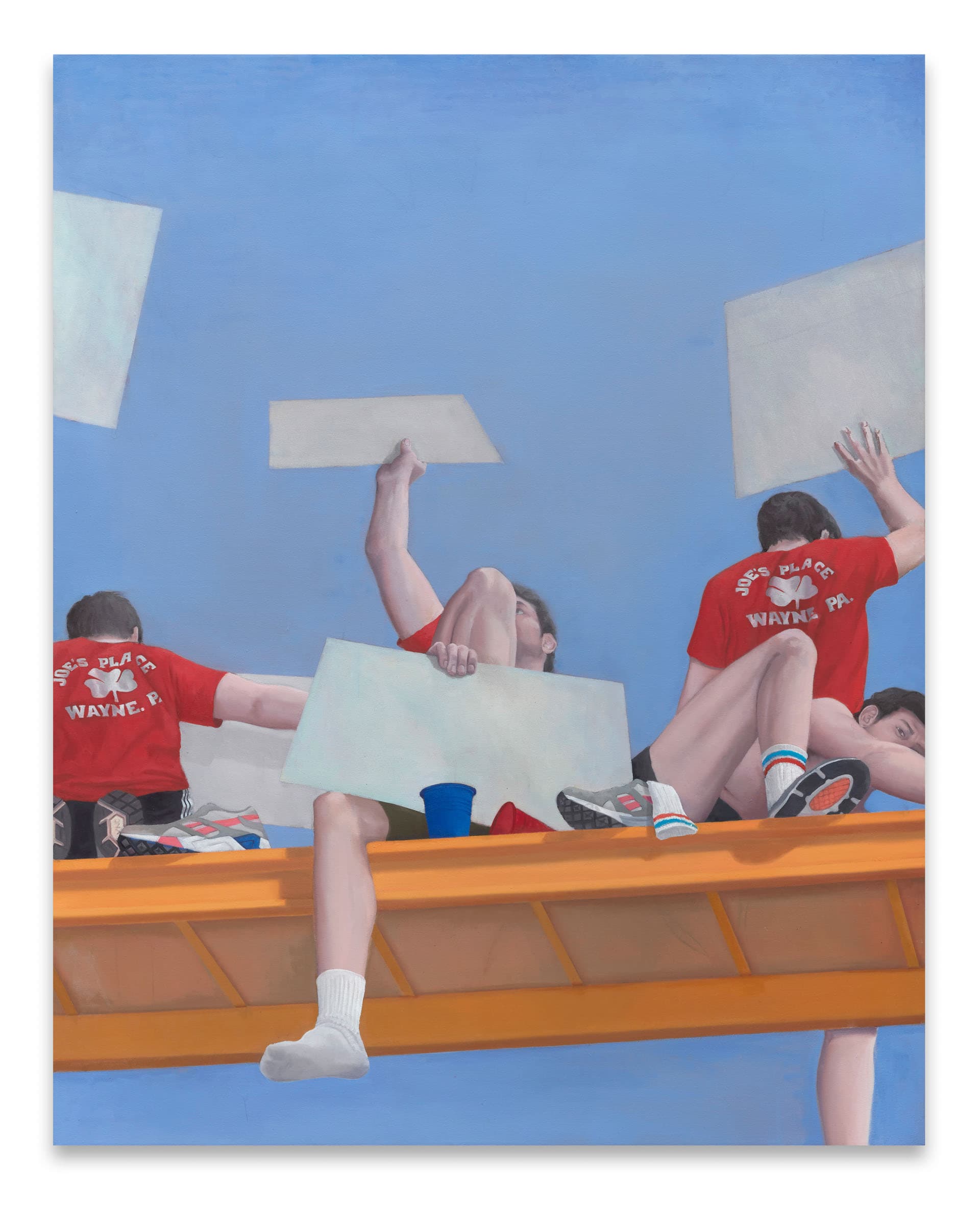
Thomas Eggerer, Joe’s Place, 2020. © Thomas Eggerer. Courtesy the artist and Capitain Petzel, Berlin. Photo: Thomas Müller.
Fredric Jameson!
Many people in my line of work think they have to innovate all the time. But Marx had a method. And Jameson really figured out a method for Marxist cultural interpretation. In the Postmodernism book, that requires scale. But if he avows that we are not in postmodernism anymore, which he did in 2016, how do you talk about what’s different? Scale also makes the argument concentric. There is the economic base, which is about circulation. There is the psycho-affective, internal base, which is the imaginary, and different frameworks come together. Psychoanalysis and Marxism have many things in common. Thinking across media is something that Jameson does in Postmodernism, or, the Cultural Logic of Late Capitalism (1991), too, although the problem I’m dealing with is the rejection of medium specificity. I usually work by closely thinking about individual objects, which could be an entire chapter about Charles Dickens’s novel Bleak House (1853) or David Fincher’s movie Fight Club (1999). Putting a lot of objects into one chapter is a violation of the sanctity with which certain critics treat their objects, but it allows the search for pattern, resonance, and connectivity. You’re not performing reverence to the singular object. That also made me uncomfortable, because I’m invested in the complexity of individual objects. But you need many examples to be convincing about a macro-cultural formation. And just as scale is an aspect of Marxist methodology, it also has aesthetic ramifications. Scale is one of the three anti-immediacy aesthetic values I recommend in the conclusion of my book, to counter relentless personalism, anti-representation, anti-fictionality, and a vibrating present.
You use graphs to show the recent proliferation of first-person novels. It reminded me of Franco Moretti’s distant reading, which also violates the ethos of New Criticism and close reading, its preferred method.
I got the graphs from one of the most famous computational humanities scholars. He is no longer a professor of literature, but of informational sciences. I told him what the graph was going to do, and it did it! I have been quite critical of the form of computation that Moretti and distant reading use. Moretti made the epistemic claim that it is better to know things computationally than through reading. For example, 19th-century novels have lots of characters, and 19th-century social realism is invested in thinking about different kinds of people and in putting them into relation to each other. Moretti-inspired critics claim we can prove this mathematically by counting names. But literature is about ways of knowing that are not quantitative. It’s very funny that I turned to that approach. I felt the problem was finding ways to be convincing. I can make a list of all Booker Prize-winning novels from the 21st century, and most of them are in the first person. But the graph shows that this is a historical mutation in how novels were composed for three hundred years.
Moretti’s method seemed like an overcorrection. Everybody knows Charles Dickens’s Bleak House, but in that same year, many other novels were published that are out of print, and nobody discusses them anymore. When I engaged with Moretti’s study, it felt like a way to read outside of the canon–by making a computer do the work.
On the one hand, you’re totally right. These other novels are not canonized because they are by lesser-known authors, published by small presses, or not anointed by critics. On the other hand, the claim is often that quantity means more knowledge. Bleak House has so much to teach us, and canonicity is also about resonance, meaning, and value. William Faulkner’s works were all out of print while he was alive, but a press later decided to publish his collected works. Now he is on every syllabus. Certain works get on the syllabus because they are complicated and inexhaustible.
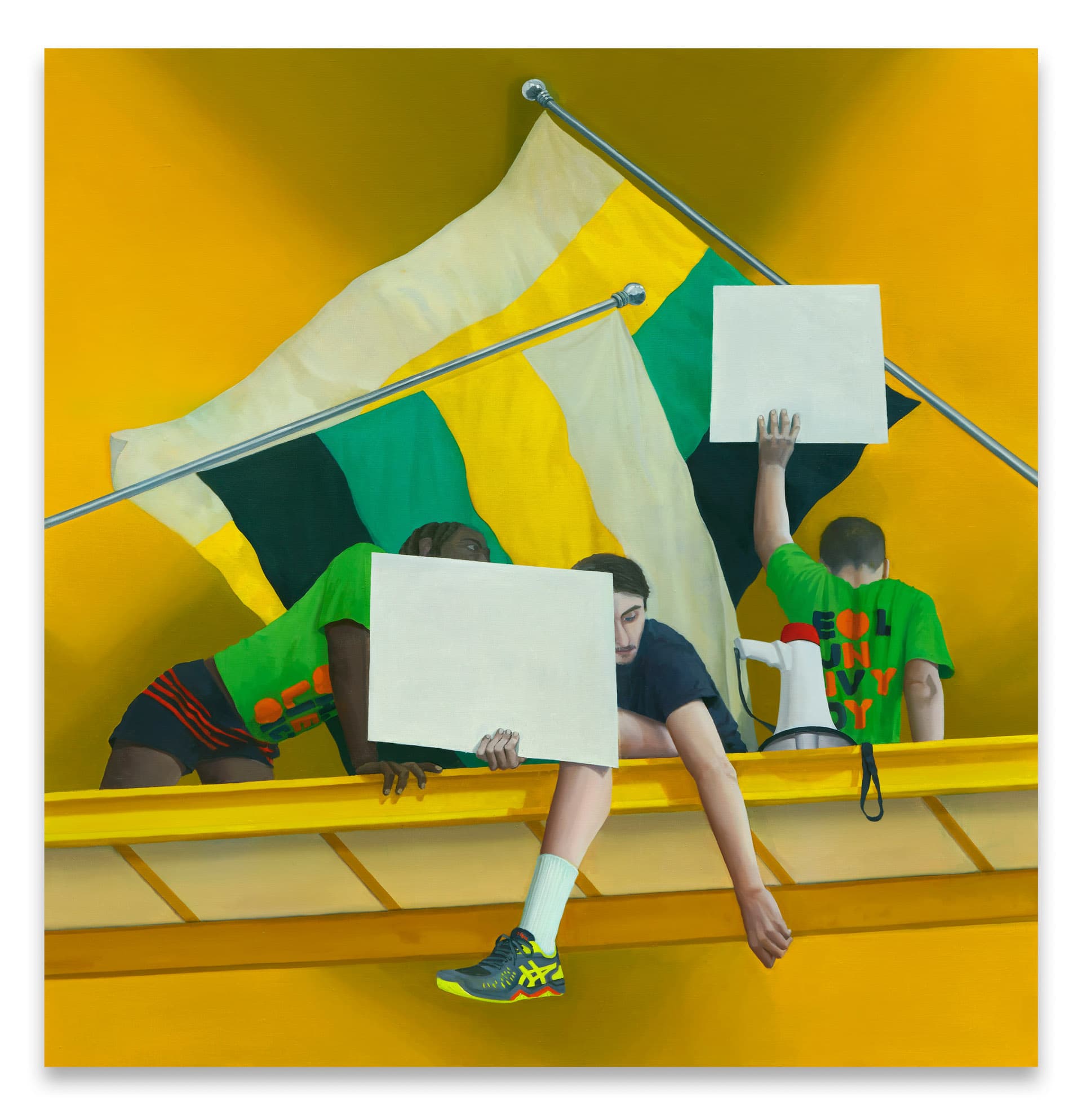
Thomas Eggerer, High and Dry, 2021. © Thomas Eggerer. Courtesy the artist and Capitain Petzel, Berlin. Photo: Thomas Müller
You mentioned Fredric Jameson and his idea of postmodernism as the style of late capitalism. For your book, you chose the subtitle The Style of Too Late Capitalism. I was never sure what late capitalism means in the first place. It sounds like it is about to end.
People have used this modifier since the 1890s. It’s been late for a long time; it’s late at being late. The term has also become a colloquialism, a meme. There is a proliferation of terms for what kind of capitalism we are in. Since I wrote the book, a tremendous amount of theory has emerged, arguing that we don’t live in capitalism anymore but in neo-feudalism. This accumulation of names is a weird entanglement with academic branding: I will write the book on platform capitalism, I will write the one on surveillance capitalism. “Too Late Capitalism” is the same but different. It is not late capitalism, it is just in excess. It introduces a temporal problem. It is less about the phase and rather about something that has already passed. Jameson claims that a feature of postmodernism is its incorporation of elements of historicity in a decontextualized way, which is why we see Doric columns with neon lights. Our foreclosed future is a crisis of futurity. We have lost historicity, but we have also lost the future. That accounts for the experiential, aesthetic, and philosophical investment in a vibrating present and in immersion. The loss of futurity is linked to the climate and to ecocide, and the catastrophic consequences that are in motion because of carbon that was emitted decades ago.
You quote Mark Fisher, who relies heavily on the idea that the future is lost. Your study takes that trope, but makes it plausible in a different way.
Fisher was interested in the inability to imagine a future, which corresponds to depression. That is a permutation of the End of History, in a way. We don’t have plausible plans for a different society, but it is also about the mental experience of having a compromised sense of political agency, and about encountering artworks that don’t offer tools to envision the future. In my study, I’m trying to provide something that is less affect-centered, and to think a little more about the material reasons. It is not an attitude or mental illness. Things are objectively totally screwed, so these are perfectly understandable responses–which doesn’t mean they can’t be mitigated. It is never too late to make things less worse.
What is your historical scope for immediacy? When does it become a fully formed cultural style?
It is always a possibility that art is interested in; it is also something philosophers worry about. But when does it become a dominant style? That is a claim about a cultural period, and periodisation is the complement to scale in the Marxist method. We think there are periods of technological dominance: the printing press and the internet. Or there are periods of production processes, such as primitive accumulation, mercantilism, or financialisation. Aesthetic styles lend themselves to them. Jameson is interested in the sequence of realism, modernism, and postmodernism. Marxist critics are interested in the relationship between realism and industrialisation. To think of immediacy as a cultural dominant rather than an intermittent capacity of artistic production means to consider what comes after postmodernism. I try to describe what is different economically. We are still in capitalism. But how do the 2010s and 2020s differ from the 1960s? The difference is in the intensification of circulation in the G7 economies. Capitalism works by producing goods and circulating them, and it derives value from both sides of that process. In advanced capitalist countries, there are periods where production is the driver, then there are times when circulation–often understood as finance–is more dominant.
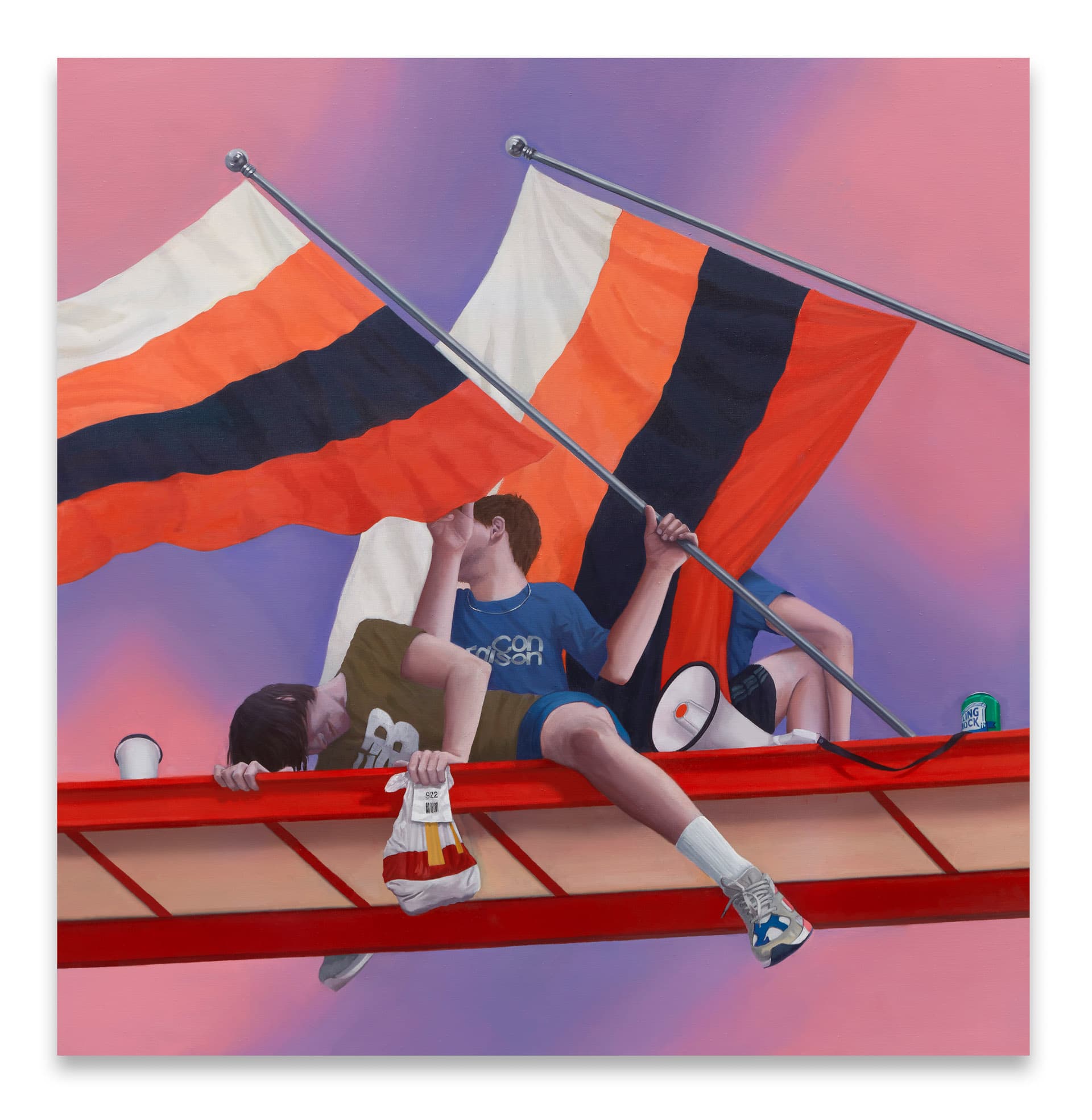
Thomas Eggerer, Stranded, 2021. © Thomas Eggerer. Courtesy the artist and Capitain Petzel, Berlin. Photo: Thomas Müller.
What I mean by the intensification of circulation in G7s relates to the internet and to data becoming ideologized as a source of value. It is related to the non-productivity of the G7 economies. I follow the hypothesis of relative stagnation in industrial economies, which have reached saturation in their production capacity. These economies had regressive tax policies that prevented reinvestment in production or social reproduction. You are not making many things; the world market is saturated: only so many cell phones you can sell, even in Sub-Saharan Africa. Instead, corporations have emphasised exchange processes. Trade things faster, have instant access, and the gig economy. We don’t build enough houses, instead we put housing back into circulation via Airbnb, for example. Many of the things we recognise as innovations–Airbnb, Uber, etc–are about the intensification of exchange processes. Proximity, instantaneity, and direct access provide the context for aesthetic values such as instant connection, directness, forthrightness, authenticity, immersion, fluidity, and one-to-oneness. Things that look compelling and as if they have evolved organically are actually congruent with the intensification of circulation.
This intensification also goes for labor–people are freelancers with multiple roles. Critics are editors or PR people on the side.
Flexibility, right?
A freelancer in the gig economy who lives on charisma has to cut out medium.
I think about these things a lot. We are told that it is liberating and anti-elite to exist and hustle on charisma alone. Anyone can become an influencer. These are the romanticisations and ideological distortions of the terrible conditions of the dismantling of social reproduction. People don’t have guaranteed access to education, healthcare, or unions. The ideology of self-actualization is really a terrible moustache drawn on these degraded labor conditions.
I wonder if a first-person narrative wouldn’t be a good form to reflect the labor conditions of cultural producers, like Rachel Cusk writing a novel about being a novelist.
I don’t think so!
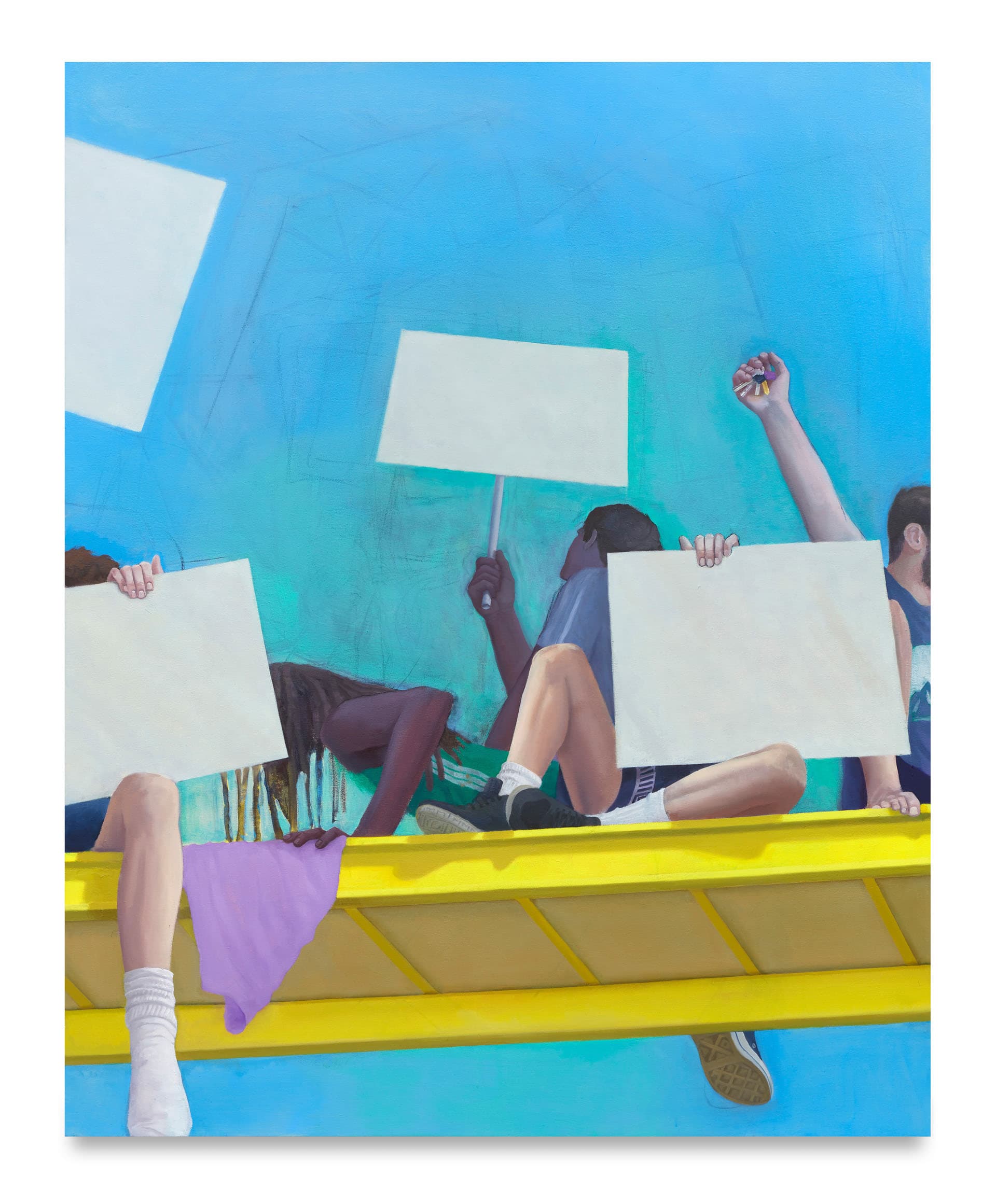
Thomas Eggerer, Paramount, 2020. © Thomas Eggerer. Courtesy the artist and Capitain Petzel, Berlin. Photo: Thomas Müller.
Why?
We are fifty years into the ideology of testimony and self-presentation. Being a gig worker is a structural fact of our economy. The aesthetic forms that are oriented towards relaying social truths use a cast of characters, and that is necessarily asymmetrical, because you can’t give everybody their own story. There is something socially powerful about third-person representation, or first-person plural representation.
There is a discourse around autofiction that poses it as an emancipatory form. It centres marginalised voices and those who are excluded from the canon.
I’m not putting forth a claim about the forms for all time. Audre Lorde wrote autotheory of sorts, and I am not arguing that these texts from the 1970s are no good. I suggest that these forms, which had a certain purchase on thought and power then, do not have the same purchase in the 2020s. Power and economy have changed. Tech companies want you to film yourself in vertical video, which shows only one face and erases context. The idea that individuals are the authorities on themselves is promulgated by platform companies that want you to deliver as much of yourself as possible–so they can create predictive data about your shopping habits. The incentives of that economy are structured around self-expression. In that macro-structure, you can’t say that there is inherently radical power in the first-person narrative by a non-white woman. This isn’t to invalidate the power and autonomy of art. Nor to deny that these forms might work differently in the future. Moreover, autofiction isn’t just about the first person. It is framed as an attack on fictionality and on making, an insistence that it is illegitimate to represent characters and disgusting to make things up. Plots are nauseating, and you are not supposed to be anywhere but the present. There is a rebuke of the notion that people use language to make more than what is already here. The disgust with making that Cusk, Knausgaard, and Tao Lin express elaborately makes me think about deindustrialisation and the crisis of production. Why do we have this revulsion against creativity and making? It drives the AI overlords. Their whole pitch is: why do you want to get bogged down in writing, craft, making a video, when you can just snap your fingers, and it’s there? Why do you want to read? But the output is actual shit. The disparagement of process is not radical genius, it is not eccentric artists who are keeping it real, and it is not innovative oligarchs who know the future. It is part of an overdetermined economy.
What is progressive about making fiction?
So much! If you invent a world, which we do in novels, if you are writing a song or making a sculpture, you project possibilities that there are societies and relationships we don’t yet have. To me, that seems inherently utopian. Instead of Mark Fisher's adage that there is no alternative, fiction offers a speculative gambit. This belief in agency and political possibility is progressive. Human beings are not profit machines, and it is important to practice a creative process that isn’t the same as what everybody else is doing. If there is any universal claim about human existence, it is that we are creative. We play, we make things for no other purpose than that they are interesting. We like beauty, novelty, and strangeness. That has to be honored above all if we want a vision of why human beings should be kept around.
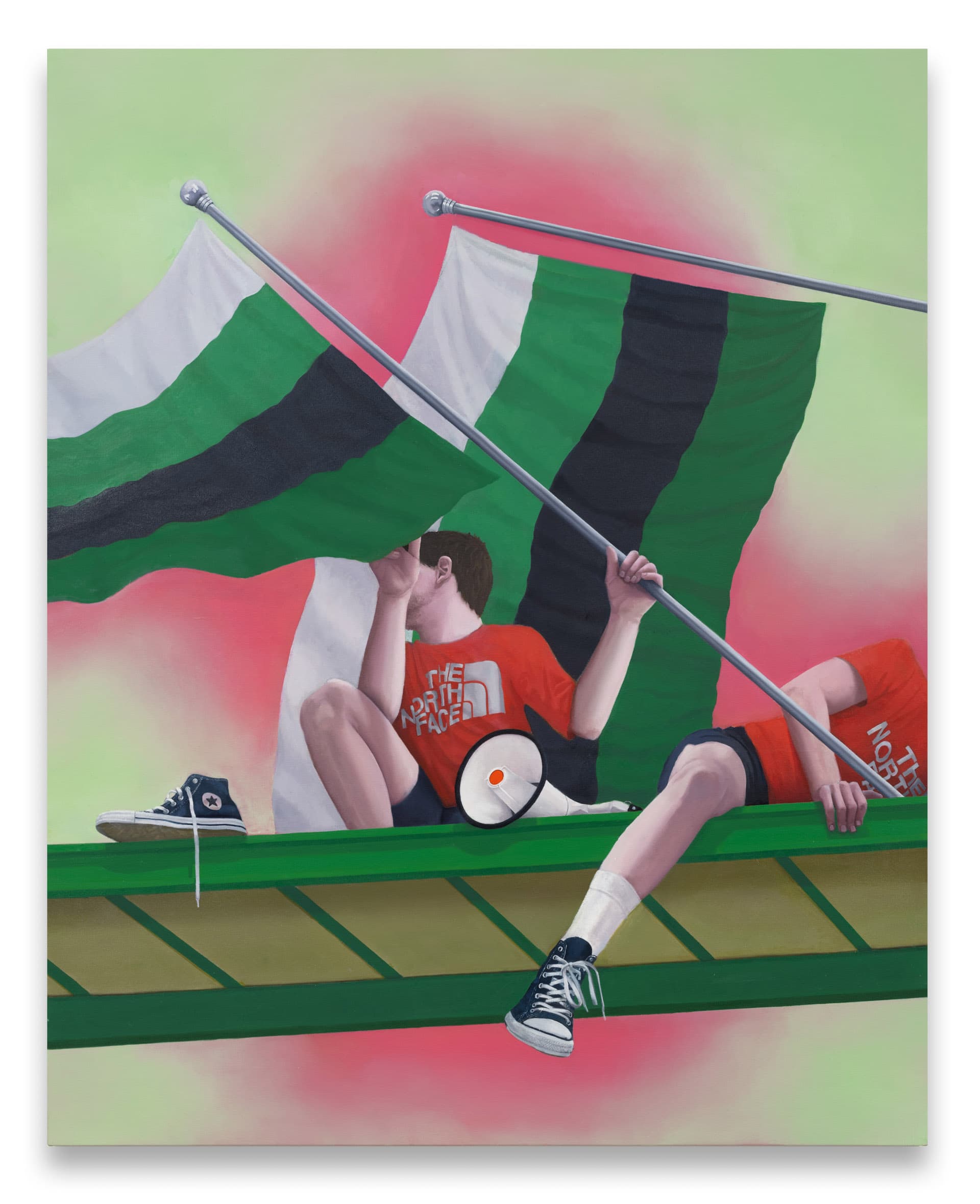
Thomas Eggerer, The North Face, 2022. © Thomas Eggerer. Courtesy the artist and Capitain Petzel, Berlin. Photo: Thomas Müller.
Perhaps another symptom and too-lateness is the dispersion of writing and stories across corporate fields. If you took up the humanities after 2008, it would be sold to you by saying that becoming a scholar isn’t the only option. You can also become a trend forecaster or work a corporate job.
A lot of that discourse has vanished lately. But we spent much of the 21st century thinking that digital automation would mean advanced countries would emphasize the production of culture and ideas. Now, the ideology of AI is that we should expel creatives from the workplace. The idea of authoritarians is that the populace should not be educated. A novelist or someone with an MFA could be gainfully employed writing ad copy or doing marketing, not as a back-up plan but as a goal, which is a collapse if you maintain an idea of art as separate from industry. I am concerned with those collapses. But I’m also interested in the long history of how creative industries where often unionised workforces were integral to the proliferation of the middle class in the 20th century: journalists, magazine writers, workers at big publishing houses, or at Hollywood studios. The problem is: why do we have this expulsion of labor from these industries now? That has to do with the productivity crisis and the transition to streaming and an impressions-based model for cultural production. That is not sustainable as a business model. It also has to do with the private equity takeover of the cultural industry, which hollowed out journalism, publishing, and television. That is about short-term returns. The collapse of genre and medium has real industrial underpinnings. If you’re a novelist who also works for a marketing agency, that’s good because your publishing house no longer has a marketing department. You have to self-represent. You need a social media following before you have a novel contract. The contraction of industries delegates responsibility to creative professionals.
When I read Rachel Cusk, I was very aware that I’m looking at a novel, and what’s more, one intended to seem like it’s not made. You use the term ideology in the sense Louis Althusser uses it: as an imaginary way of relating to the world. Is immediacy ideology? Is it a style?
I think it has ideological efficacy. But I call it a style for several reasons. Rejection of the medium is key. Instead of saying this is the ideology of discrediting production or mediation, we just say: it is the style of having a charismatic persona. What is a Cusk novel but the cold judgment of people she comes into contact with? It is not just Cusk and Knausgaard. They share a project with Fleabag (2016) or Euphoria (2019-ongoing). This unavowed project makes me want to use the word “style,” a rubric with different aesthetic grammars. I draw the analogy between fourth wall-breaking vertical video and first-person narration, and I’m very interested in genre annihilation, a genre slurry. The boundaries break down, resulting in an ambient, vibe-driven aesthetic with graphic, violent eruptions or an overly corporealised focalisation. Calling it a style enables me to link different forms and highlight their commonalities. What does Fleabag have to do with Knausgaard, and with Toyotaization? Before the book came out, I would end my talks with a last slide, the conspiracy meme “It’s all connected, man.” That is the kind of Marxist method we are talking about.
That is truly paranoid reading.
Yes!
I stumbled upon your analysis of the movie Uncut Gems. Are the Safdie Brothers immediacy-coded? I always thought of them as very aware of the medium, to the point of fetishizing film stock. They pay close attention to camera work and framing. Can there be confusion between immediacy and its effects?
An important observation! I’m sure there are places where I am arguing counterintuitively. I’m trying to develop a description of the different techniques used in the style. I agree that the Safdies are interested in cinematography that calls attention to itself. But I think their ethos–also true for Marty Supreme (2025), which seems like Uncut Gems 2–is to argue that what cinema is good at, whether it calls attention to its framing or not: the precipitation of extreme affect in the audience in response to the depiction of extreme affect. These effects can’t be disentangled from aesthetic strategies, especially strategies that obfuscate their own aesthetic. And I think the fantasy of corporealised, internalised proximity of the representational apparatus is a very eloquent expression of the concern that mediation is in the way, it must be rejected, cut to the feeling.
Anna Kornbluh is Professor and Associate Head of English at the University of Illinois, Chicago. She is the author of four books, most recently, Immediacy, Or, The Style of Too Late Capitalism (Verso 2024). Essays on climate aesthetics, TV, academic labor, psychoanalysis, and finance have appeared in outlets like The Chronicle of Higher Education, The Los Angeles Review of Books, Diacritics, Public Books, and Portable Gray. Her cultural criticism has earned her the #9 slot on the Art Review Power 100 List for 2025. She serves on the national coordinating committee for Higher Ed Labor United, and on the editorial boards of Novel, Genre, and Parapraxis, and is the founder of InterCcECT (The Inter Chicago Circle for Experimental Critical Theory) and against-a-i.com.
Philipp Hindahl is a magazine writer and editor based in Berlin. He covers art, architecture and cities, society and literature.
finanziato dall'Unione Europea - Next Generation EU